
Short answer
Find cleaning leads by monitoring local requests for a cleaner, move-out cleaning, deep cleaning and office cleaning. Separate one-off from recurring work, confirm area and service scope, then explain the information needed for a quote. Track accepted jobs and repeat bookings separately from incoming alerts.
Get an alert when a neighbor asks for your trade. 7-day trial, no card needed.
Add to ChromeKey takeaways
- Recurring domestic, end-of-tenancy and commercial cleaning are different buying situations.
- Qualify the property and requested tasks before discussing a fixed price.
- Keep recruitment, product recommendations and DIY cleaning out of your lead totals.
Choose the cleaning work you want more of
A cleaning business can receive many enquiries that do not fit its service. Separate regular home cleaning, deep cleans, move-out work, short-term-rental turnover and commercial premises before writing search phrases. Each has different expectations about timing, access, supplies, scope and who approves the booking.
Decide which categories your team accepts and where you have capacity. A recurring weekly slot is different from an urgent one-off clean before a handover. If your business does not provide a specialist service, do not include it in your public response just to attract attention. A focused offer makes it easier for both the customer and your team to decide whether a conversation is worth pursuing.
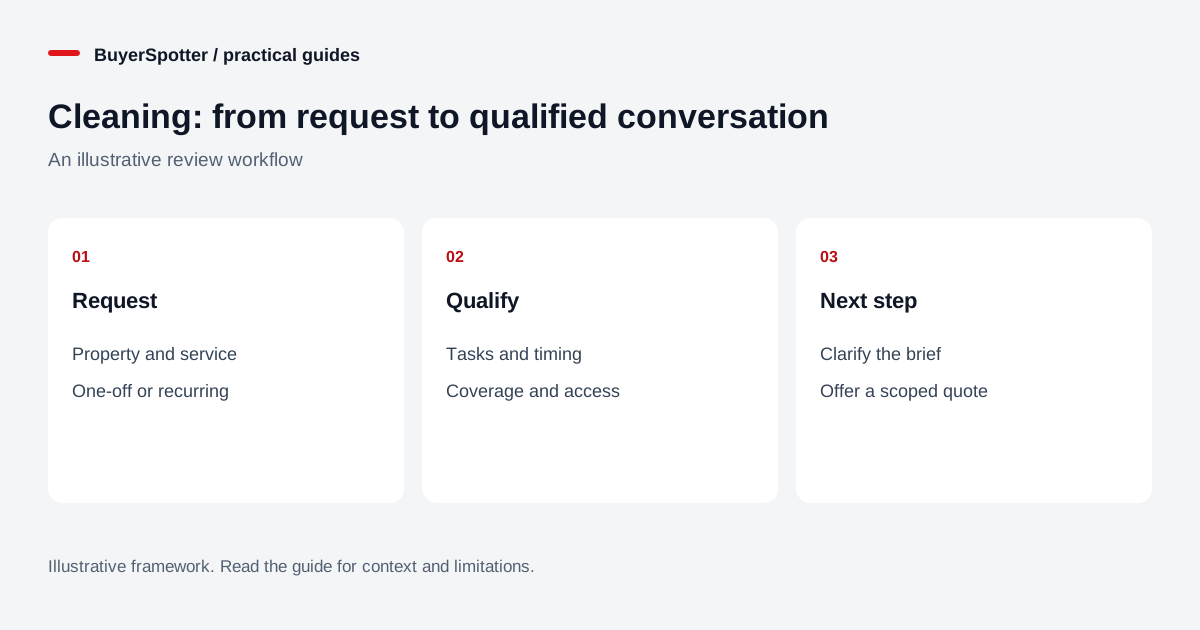
Read the diagram as text
- Request
- Property and service
- One-off or recurring
- Qualify
- Tasks and timing
- Coverage and access
- Next step
- Clarify the brief
- Offer a scoped quote

Use the language people use when asking for help
Start with requests, not the broad word “cleaning.” A buyer may say “our cleaner is moving away” or “need the flat cleaned before handing back the keys.” Search direct phrases first and add situation-based wording when you see relevant examples in your chosen communities.
Swipe sideways for more columns, if needed.
| Illustrative phrase | Question to resolve |
|---|---|
| recommend a cleaner | Home, office or another property? |
| regular house cleaner | Preferred days, frequency and general area? |
| move out cleaning | Property scope and handover date? |
| office cleaning company | Premises, service window and decision maker? |
Review potential exclusions carefully. “Hiring” may mean a company recruiting employees, but a customer can also write “hiring a cleaner.” Read a sample before excluding language that could remove genuine enquiries.
Look for customer communities, not only trade groups
Accessible neighborhood groups and local recommendation discussions can contain requests from residents. Professional or business communities may be more relevant for office cleaning. Before monitoring a source, check whether its recent posts include the kind of customer and property your business serves, and whether commercial responses are permitted.
A group filled with cleaners advertising to one another is not automatically a good source of cleaning clients. Likewise, a busy community about cleaning products may contain plenty of relevant words but little intention to hire. Keep a small source log describing what you actually found, instead of choosing only by member count or activity.
Turn a vague enquiry into a usable brief
Ask for the general location, property type, approximate size, service requested and preferred date or frequency. Explain which tasks your standard service includes and which need a separate discussion. Avoid asking someone to post their exact address or access information publicly. Those details belong in your normal booking process after they choose to proceed.
For move-out cleaning, establish the timing and requested scope before promising that a job meets any third party’s requirements. For recurring work, confirm whether the customer has a fixed day in mind and whether you have a sustainable slot. For commercial work, identify who can approve a proposal and what service hours are practical.
Do not confuse a quotation request with a confirmed booking. Record missing details explicitly so the next conversation does not start from assumptions.
Keep monitoring separate from answering
Manual searching works when you only follow a few sources. As the routine grows, BuyerSpotter’s Facebook monitoring and Nextdoor monitoring can collect matching requests for review. Scanning depends on desktop Chrome being open and the required source access remaining available. It cannot promise that every post will be captured.
Keep a person responsible for reviewing and replying. BuyerSpotter does not post comments or contact customers automatically. Check the current thread, confirm the enquiry is still open, and use your real booking process for customer details. The user guide explains how to set phrases and check that scans are running.
Measure both first bookings and continued fit
Record reviewed requests, suitable enquiries, quotes, first bookings and recurring arrangements separately. Add why an enquiry did not fit: area, task type, unavailable day, already booked or incomplete information. For recurring customers, record whether the arrangement continues; a first booking alone does not establish a long-term relationship.
Compare results with the time spent checking and replying. BuyerSpotter’s current plans are $39 per month or $390 annually. The seven-day trial requires no card and begins after the first successful scan. Use it to test your source and phrase choices, then decide using observed conversations and bookings rather than the size of the alert inbox.
Examples, sources and image method
Original worked examples and worksheets by BuyerSpotter. Requests and sample datasets are fictional. References are linked where used.