
Short answer
Useful SaaS buying signals go beyond a product mention: a request for a tool recommendation, a search for an alternative to a named product, a missing integration, or a team trying to retire manual work. The constraint in the post, such as current system, team size or data format, decides whether your product fits today.
Let BuyerSpotter watch your groups and searches for you. 5-day trial, no card needed.
Add to ChromeKey takeaways
- Start with the job your product does, not your category name or a competitor mention.
- Test the requirement most likely to disqualify you before recommending your tool.
- Qualify on features that work today; keep planned roadmap items out of the fit decision.
- Keep recommendation, alternative, integration and manual-work posts in separate groups; each needs a different response.
- A job title or company name does not establish budget or purchase authority.
Follow the workflow problem
A SaaS team can spend hours collecting mentions that say little about demand. Start with the task your product helps people complete. Look for requests for a recommendation, a replacement, a missing integration, or a way to retire manual work.
The useful detail is often the constraint: team size, current system, approval process, data format, or migration deadline. Write down which requirements your product supports today. Keep planned features out of qualification.
The same signals appear on LinkedIn and X (Twitter); competitor alternative requests are a special case.
Read the requirement inside three software requests
A request for a tool is more specific than a mention of its category, but the same category can hide very different requirements. These examples use fictional teams and unnamed software. None describes a BuyerSpotter integration.
Swipe sideways for more columns, if needed.
| Example request | Useful evidence | Check before suggesting a product |
|---|---|---|
| What booking tool lets two staff members share availability and sync both Google calendars? | A recommendation request with a calendar and scheduling requirement. | Whether the current product supports the required calendars, conflict handling and staff workflow. |
| We need an alternative to our booking system because exporting appointment notes is too difficult. | A switching request with a stated reason to leave. | The required export fields and format, migration effort and any limits that still apply. |
| We keep copying appointment requests from a form into a spreadsheet. Has anyone found a better way? | Manual work and a question about alternatives. | Whether they want software, a process change or help configuring something they already own. |
Each can lead to a useful conversation. They should not all lead to the same pitch. The calendar request needs a compatibility answer. The export request needs a migration answer. The spreadsheet discussion may need one question before you can tell whether a product recommendation belongs there.
For broader monitoring, keep these request types distinct in your review notes. That makes it easier to see whether you are finding evaluation questions or merely collecting complaints.
Read the example as text
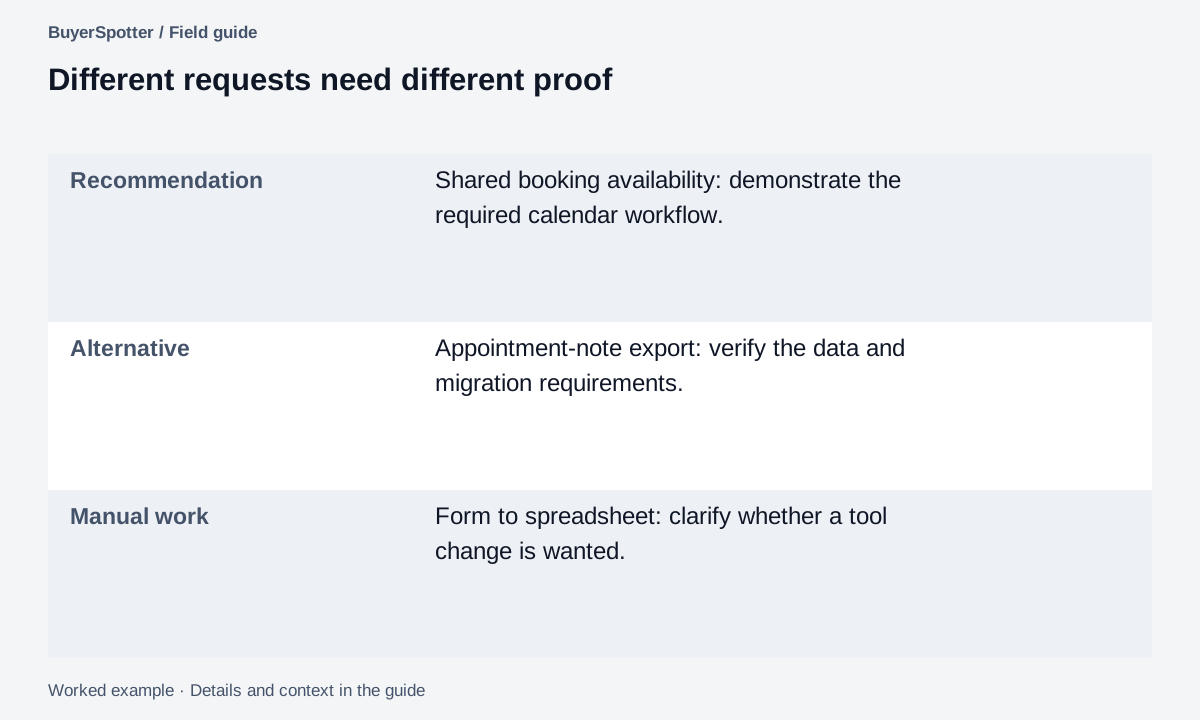
- Recommendation
- Shared booking availability: demonstrate the required calendar workflow.
- Alternative
- Appointment-note export: verify the data and migration requirements.
- Manual work
- Form to spreadsheet: clarify whether a tool change is wanted.

Separate a request from a broad complaint
Example
"What do small agencies use to approve client content? We need clients to comment without creating another account."
A content-approval tool should check the external-reviewer requirement before treating this as a fit. The phrase "approve client content" alone is insufficient. A post saying only "client feedback is exhausting" belongs in research until more context appears.
Keep different decisions distinguishable
- Recommendation requests tell you which job someone is evaluating.
- Alternative requests add an existing product and a reason to switch.
- Integration problems reveal a compatibility requirement that may disqualify you.
- Manual-work discussions can reveal a problem without an active purchase decision.
A clear recommendation request supports a different response from a discussion about how a team currently works. Keeping the types separate makes review and future phrase changes easier.
Turn a stated requirement into a product check
For each promising request, choose the requirement most likely to disqualify your product and test it before recommending the tool. Keep a distinction between something documented, something you have tested, and something on the roadmap.
Example
For the client-approval request, create a sample review with non-sensitive content and follow the guest's path. Does the person need an account? Can they leave the kind of feedback the buyer described? Does a plan or file-size limit change the answer?
A successful internal-user demo does not answer the external-client requirement. The test should reproduce the buyer's stated job, including the part that may fail.
Summarize the result in a sentence you can substantiate. If there is a gap, state it before suggesting a trial. This practice is more useful than collecting a long list of firms that happen to mention your software category.
When a request names an existing tool, follow the alternative-request review to check the reason for switching and migration constraints before positioning your product.
Read the reason beside the original wording
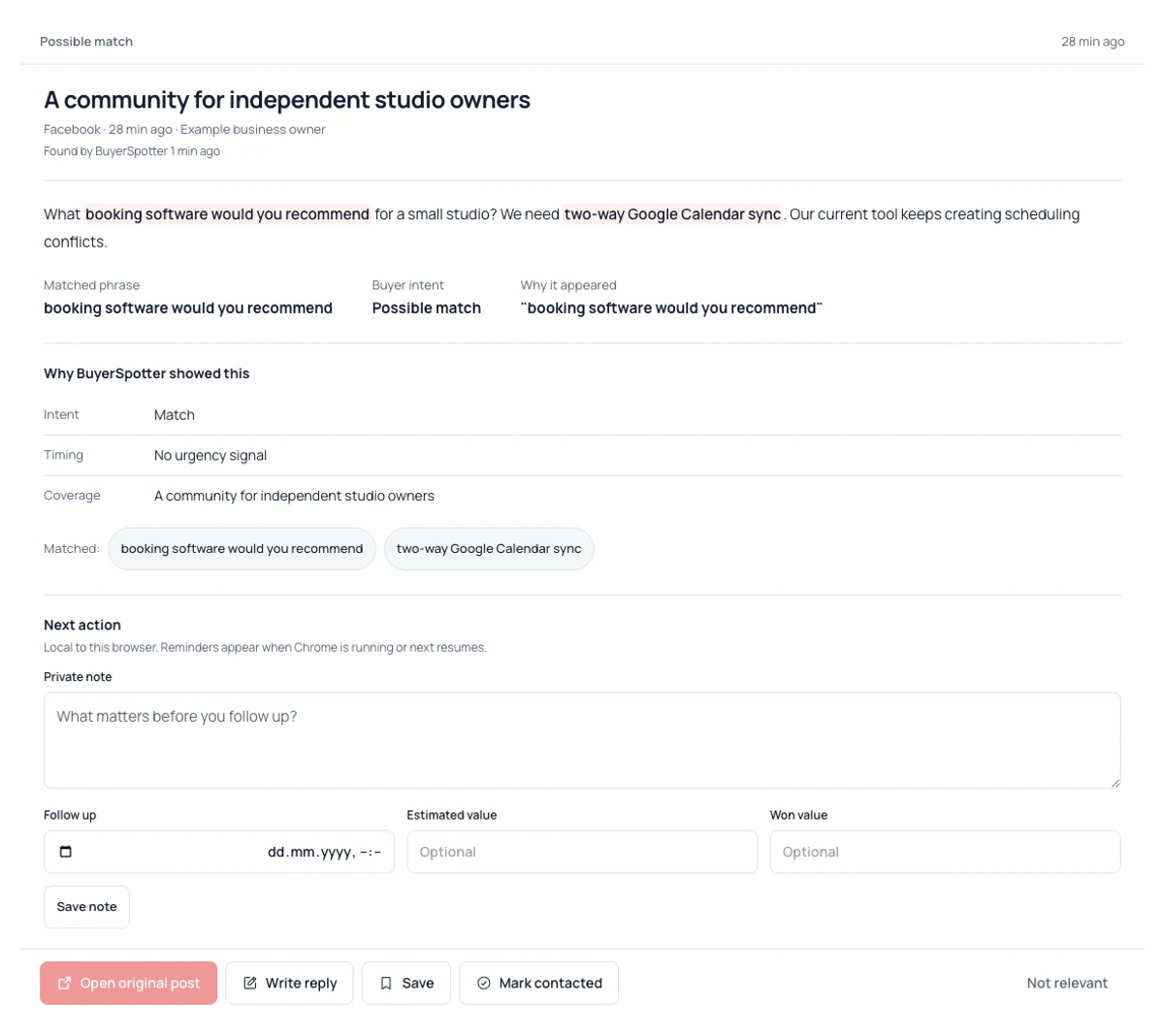
Let one unsupported requirement change the answer
Imagine you sell a booking tool and find the shared-calendar request above. A promising category match is not enough if your tool cannot handle the buyer's actual calendar arrangement. Build a small fit matrix before writing a response.
Worked example · fictional
Swipe sideways for more columns, if needed.
| Requirement | Evidence status | What you can say |
|---|---|---|
| Two staff members can take bookings | Supported in the hypothetical current product; your own check must establish it. | Describe the current staff-booking workflow and relevant plan limits. |
| Both Google calendars prevent conflicts | Unknown until you reproduce the requested arrangement. | Ask how the calendars are used; do not claim conflict protection yet. |
| Existing appointment notes migrate intact | Unsupported in this hypothetical product. | State the gap if migration matters. Do not present a roadmap item as a solution. |
If complete note migration is non-negotiable, the honest decision may be to leave the request or recommend a different approach. If the buyer only needs shared availability for new bookings, the migration gap may not matter. That distinction belongs in a question, not an assumption.
A useful verification note records the current version, the exact scenario tried and what failed. A generic screenshot showing a calendar does not establish two-calendar conflict handling. Use the alternative-request checklist when existing data or switching costs could change the decision.
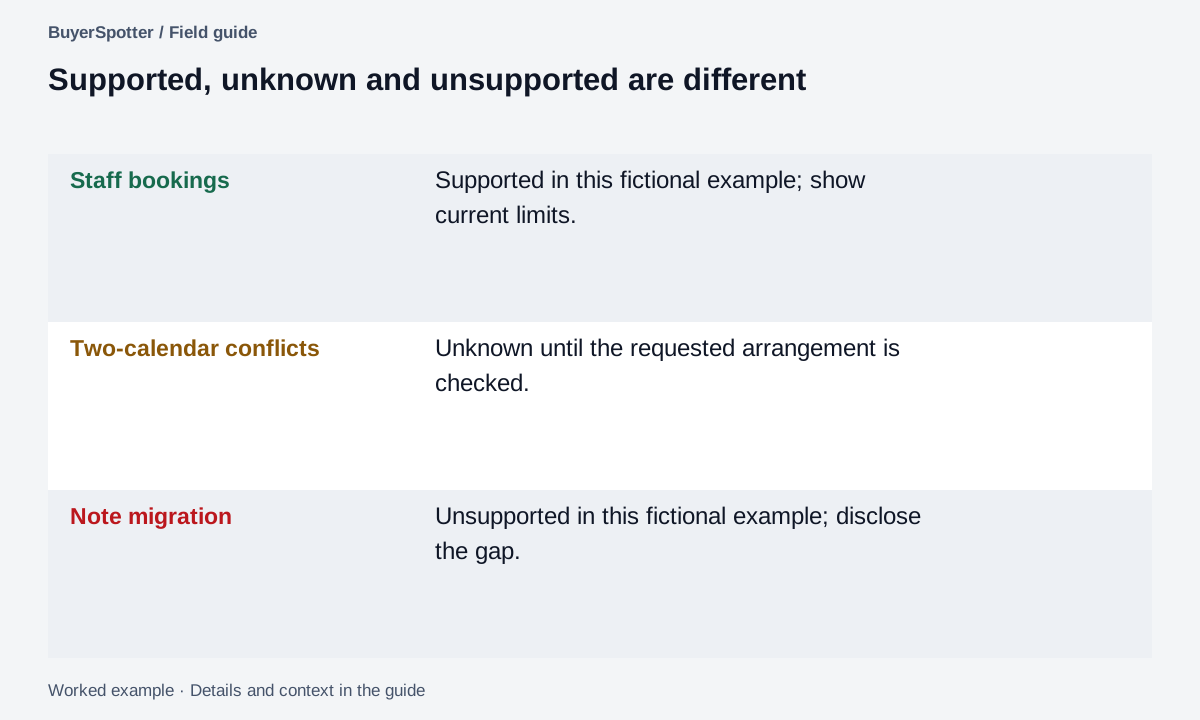
Read the example as text
- Staff bookings
- Supported in this fictional example; show current limits.
- Two-calendar conflicts
- Unknown until the requested arrangement is checked.
- Note migration
- Unsupported in this fictional example; disclose the gap.
Copy a SaaS signal brief
Workflow we support: [specific task]
Buyer or team: [who uses it]
Current workaround: [observed behavior]
Request language: [actual buyer phrases]
Required compatibility: [systems or formats]
Supported today: [verified fit]
Disqualifying requirement: [current gap]
Example to review: [link]
Useful response: [answer or clarification]
Write a response brief before a sales message
Worked example · fictional
Request: a team wants booking software that syncs two staff calendars. Stated problem: shared availability. Unknown: whether both calendars must block every appointment type. Current gap: full note migration is not supported in this fictional example.
First response to consider: "I work on a booking product. Are both calendars meant to block the same appointment types, or does each person take separate bookings? That detail determines whether our setup would fit."
The question is useful only if the answer affects your recommendation. Do not ask for a meeting merely to obtain a detail the buyer could answer in the thread. Disclose your affiliation when recommending your own product and follow the community's rules.
After clarification, demonstrate the exact supported workflow or explain why it is a poor fit. If the buyer does not answer, leave the unknown open. Neither a request nor a job title establishes a budget, a buying role or permission to send repeated private messages.
For a practice exercise, choose one request you can legitimately view and complete the blank brief below. Underline the words that justify your fit decision. If the reason depends on facts absent from the post, put them under questions to clarify. The opportunity checklist provides the same separation in a browser-based worksheet.
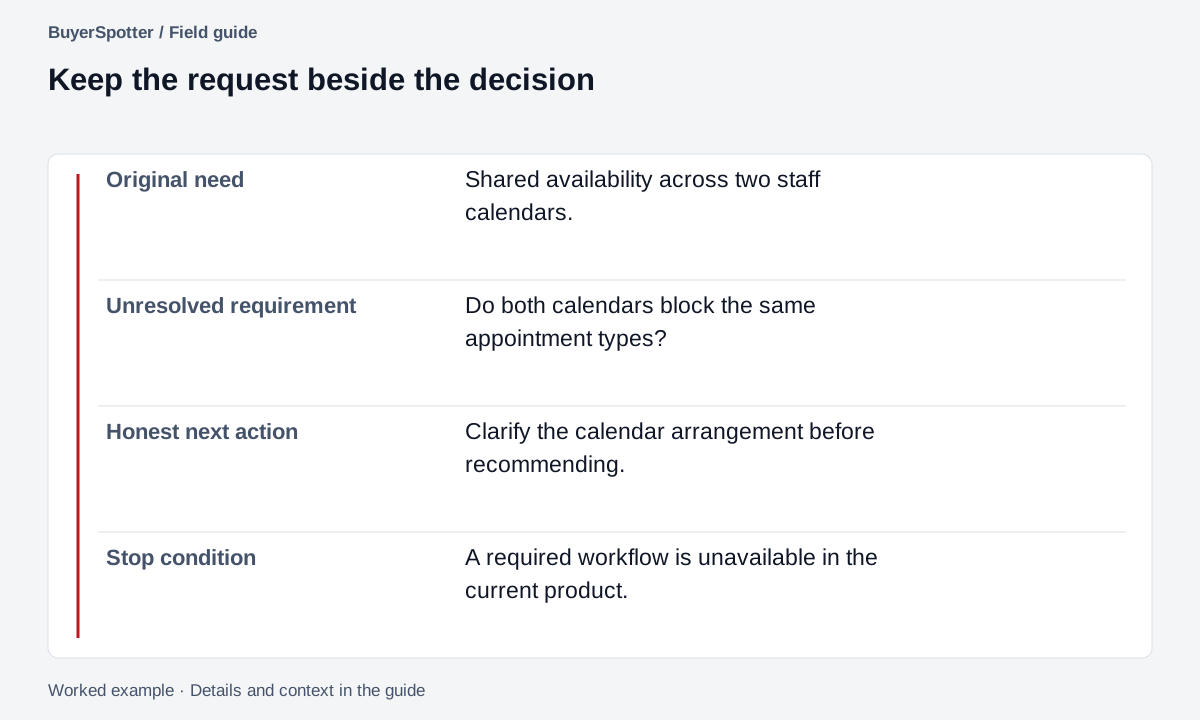
Read the example as text
- Original need
- Shared availability across two staff calendars.
- Unresolved requirement
- Do both calendars block the same appointment types?
- Honest next action
- Clarify the calendar arrangement before recommending.
- Stop condition
- A required workflow is unavailable in the current product.
Do not infer a purchase process from a job title
The author may be a user researching possibilities rather than the person who approves a purchase. A company name, role, or frustration with software does not establish budget or permission for outreach.
Review the actual request and acknowledge limitations when you respond. If your product needs an integration it does not have, a useful answer may be a question or resource rather than a recommendation of your own tool.
Sources and method
Syften's buying-intent page, reviewed 6 September 2026, describes a B2B SaaS workflow based on public conversations and includes recommendation, alternative, and problem examples.
The guest-review scenario and requirement test here are editorial examples. They do not describe a customer result or assert a feature of any named product. Verify the specific capability in the current product before using it in a response.
Frequently asked questions
What are buying signals for SaaS?
Posts where a team asks for a tool, a replacement, an integration or a way to stop doing work by hand, especially when they name a requirement you can check.
Should SaaS teams track every mention of their category?
No. Category mentions are mostly advice, launches and hiring. Pair the category with the workflow or requirement that makes your product relevant.
How do I check if a SaaS request fits my product?
Reproduce the buyer's stated job with non-sensitive sample data, including the part that might fail. Summarize the result in a sentence you can substantiate.
Where do SaaS buyers ask for tool recommendations?
Common places include Reddit, LinkedIn and X (Twitter). See how to search X for people asking to buy for a search method.
Examples, sources and image method
Original worked examples and worksheets by BuyerSpotter. Requests and sample datasets are fictional. References are linked where used.
Screenshots show the real BuyerSpotter interface with fictional requests. They illustrate the controls, not a live scan. Product version 0.8.6. Screenshots show the current interface with example data.