

Short answer
Most people searching for home improvement leads want to buy them from services such as Angi (which includes HomeAdvisor), Thumbtack or lead-list vendors. Those are usually charged per lead and often shared. The alternative is answering neighbors who ask for contractors in Facebook groups and on Nextdoor: no per-lead charge, but it takes monitoring.
Get an alert when a neighbor asks for your trade. 5-day trial, no card needed.
Add to ChromeKey takeaways
- Paid home improvement leads are usually charged per lead and are often sent to several contractors.
- Lead lists are contact data, not requests; nobody on the list has asked for your service.
- Community requests are free to answer and show full context, but depend on active local groups.
- Paying for leads still makes sense in new areas, for extra volume and for jobs people rarely post about.
- Track results by source yourself; no vendor or tool can promise how many leads become jobs.
How paid home improvement leads work
There are three main ways to buy leads:
- Marketplaces. Services such as Angi (HomeAdvisor is part of the same company) and Thumbtack collect a homeowner's request through a form and pass it to contractors. Payment models differ by service and change over time, but most charge per lead or per contact, and a request is often sent to several pros.
- Exclusive and pay-per-call vendors. These promise that a lead or call goes to one contractor, usually at a higher price per lead.
- Lead lists. Data vendors sell contact lists, such as recent home buyers. A list is not a request; you are starting cold outreach.
Prices vary by trade, area and vendor, and they change, so compare each service's current terms rather than a published average. Watch for how disputes and refunds for bad leads are handled.
Finding neighbors who are already asking
Every day, homeowners ask neighbors for contractors in Facebook groups, on Nextdoor and in city subreddits. The wording is trade-specific. These fictional examples show it:
- "Can anyone recommend a painter for two bedrooms?" See painting leads.
- "Need someone handy for a list of small repairs." See handyman leads.
- "Breaker keeps tripping, looking for a licensed electrician." See electrician leads.
- "Tree came down on our fence in the storm, who can remove it?" See tree service leads.
These requests carry no per-lead charge, and the thread shows the job, the neighborhood and who else has replied. The trade-off: they depend on active local groups, other contractors see them too, and someone has to watch for them. Answer in the thread, disclose that it is your business and follow each group's rules. The guide on recommendation requests explains which posts are worth a reply.
When paying for leads still makes sense
Finding requests is not a replacement for every paid channel. Paying can be the better choice when:
- You are entering an area where you belong to no local groups.
- You have crews to keep busy and need more volume than your groups produce.
- Your work is something people rarely discuss in public, such as foundation repair or mold remediation.
- The job value is high enough that a per-lead cost is small by comparison.
It makes less sense when leads are shared widely and your response time is slow, or when job values are small, as with many handyman jobs. In either case, keep your own record of cost and outcome per source.
Paid leads vs. community requests
Swipe sideways for more columns, if needed.
| Marketplace or vendor leads | Lead lists | Community requests | |
|---|---|---|---|
| Has the person asked? | Yes, through a form | No | Yes, in public or in a group |
| Cost model | Usually per lead or per call | Per list or per record | No charge per request |
| Shared? | Often, unless sold as exclusive | Lists can be sold to many buyers | Visible to the whole group |
| Context | Form fields | Contact data only | Full thread and replies |
| Main limit | Cost and competition | Cold outreach rules | Depends on group activity |
The table compares models, not results. How many leads turn into jobs depends on your trade, your response time, your prices and your area, and no vendor or tool can promise a number. The fair test is your own record: for one or two months, note where each job came from and what that source cost you.
Response time matters in both models. A shared marketplace lead is often contacted by several contractors, and a neighborhood request collects replies within hours. Whichever source you use, the first specific, honest answer usually has an advantage over a later generic one.
Watching for requests without scrolling all day
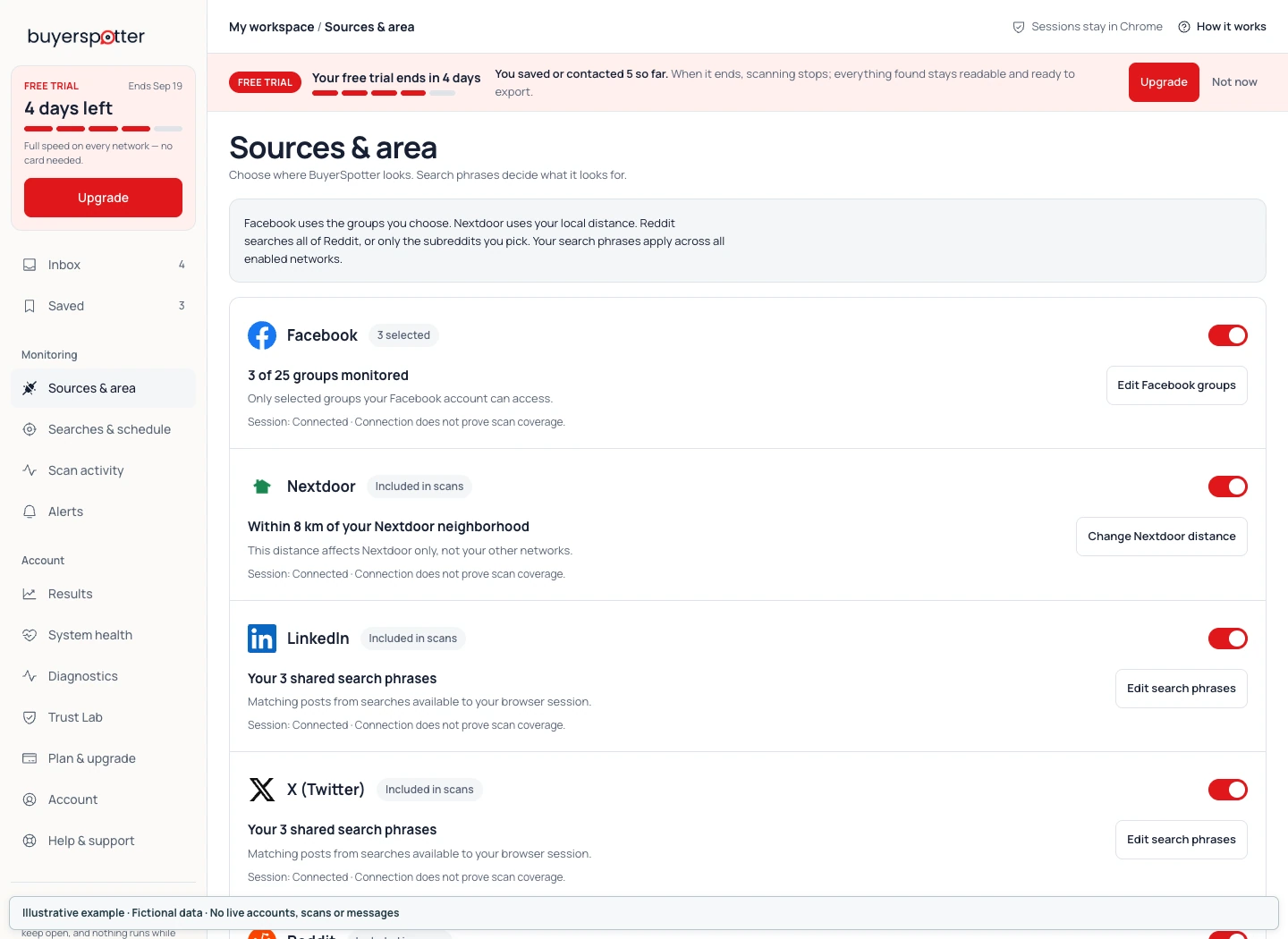
BuyerSpotter is a Chrome extension that monitors Facebook groups, Reddit, LinkedIn, X (Twitter) and Nextdoor for posts where someone asks to buy, hire or get a recommendation, and alerts you so you can reply yourself. It watches up to 25 Facebook groups you belong to, Nextdoor within 1 to 80 km of your neighborhood, and Reddit, X (Twitter) and LinkedIn searches, using up to 10 phrases. It never posts or messages. The local business guide shows a full setup.
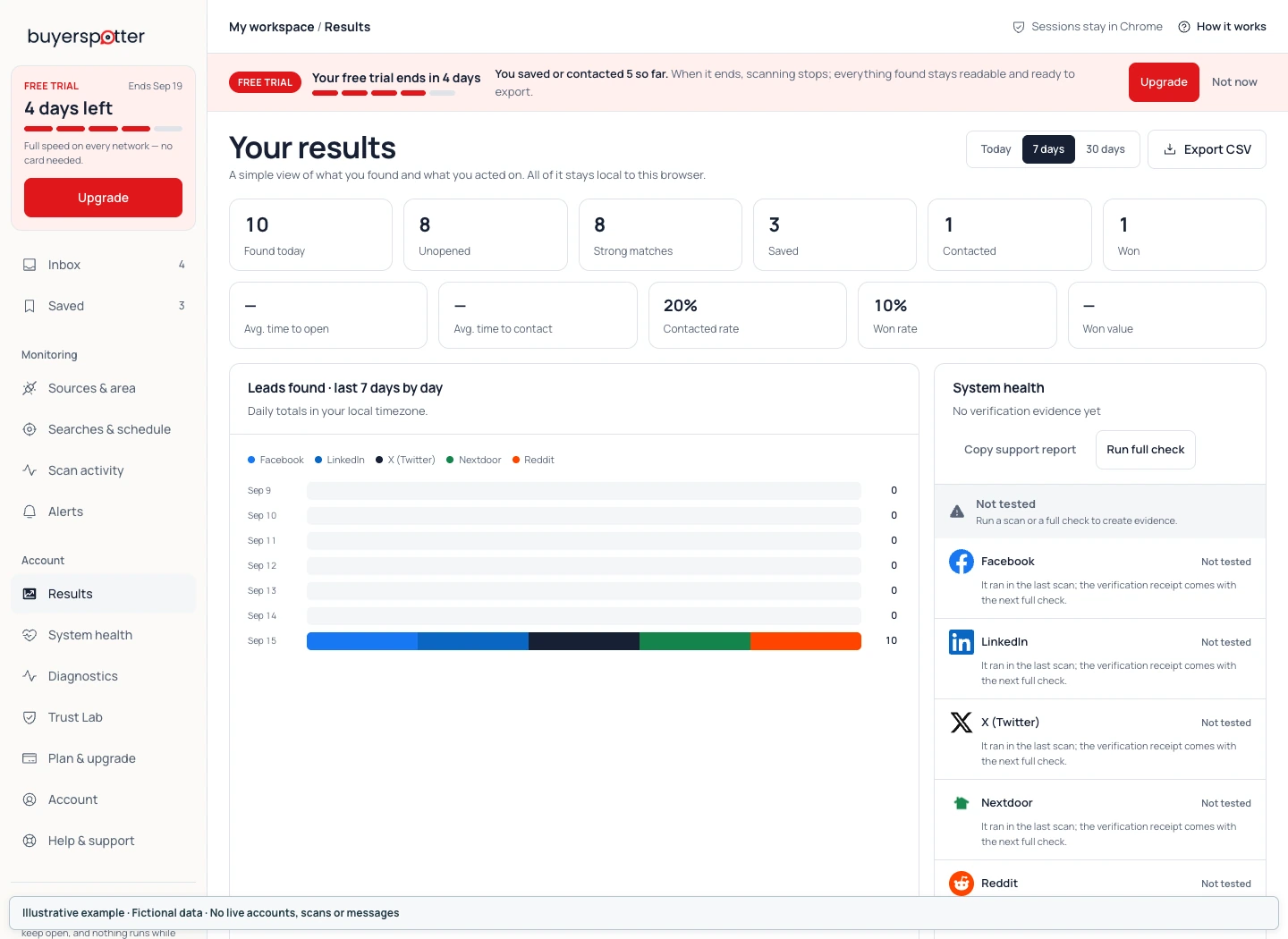
Mark each request Saved, Contacted or Won. The Results screen totals what you recorded, which you can set beside what you spend on paid leads. BuyerSpotter Premium is $39 per month or $390 per year, with a 5-day trial that needs no card.
Frequently asked questions
Where can I buy home improvement leads?
Marketplaces such as Angi (including HomeAdvisor) and Thumbtack, exclusive and pay-per-call lead vendors, and data vendors that sell contact lists. Compare each service's current pricing and refund terms.
Are home improvement leads shared with other contractors?
Marketplace leads are often sent to several contractors. Some vendors sell exclusive leads at a higher price. Community requests are visible to everyone in the group.
How can contractors get leads without paying per lead?
Answer neighbors who ask for recommendations in Facebook groups and on Nextdoor, ask past customers for referrals, and keep a Google Business Profile current. See the painting and handyman guides for examples.
Is BuyerSpotter a lead service?
No. It does not sell leads or contact details. It is a Chrome extension that alerts you to public and group posts where someone asks for a service, so you can reply yourself.
Which trades does this work for?
Any trade that people ask neighbors about: painting, handyman work, electrical, tree service, cleaning, plumbing and more. It works best where local groups are active.