
Short answer
To qualify a recommendation request, compare the service, industry, location and deadline the author states with work you can verify, record what is still unknown, and read the current thread. Then choose one action: reply when fit is clear and the source welcomes it, ask one focused question, or leave the post alone.
Let BuyerSpotter watch your groups and searches for you. 5-day trial, no card needed.
Add to ChromeKey takeaways
- The wording shows what the buyer values: someone nearby, a system they already use or industry experience.
- Record stated requirements and unknowns separately; do not invent a buyer profile from a short post.
- Reply, clarify or leave: leave when the work is out of scope, the request is resolved or the author wants customer recommendations only.
- A specific request usually beats a vague urgent one because it gives you a clear fit test.
- Recheck the thread right before replying; the answer to your question may already be there.
The request tells you what the buyer values
When someone asks a neighborhood group or professional network for a recommendation, the wording often explains more than the product category. They may want someone nearby, a tool that works with an existing system, or a provider with experience in their industry.
Use those details to judge fit before drafting a response. A short request such as "Any good accountants?" may deserve clarification; it does not justify inventing a buyer profile.
They appear most often in Facebook groups and on Nextdoor; the five local buying signals put them in context.
Four requests that deserve four different decisions
These fictional cases show why every recommendation request should not receive the same response.
Swipe sideways for more columns, if needed.
| Request | Decision | Reason and next action |
|---|---|---|
| "Looking for a payroll service for our two restaurants and hourly staff." | Review for a reply | The job is clear. Check your relevant capabilities, the current thread and whether vendor responses are welcome. |
| "Any recommendations for payroll?" | Clarify | Software and an ongoing service are different jobs. Ask which is needed if that changes your fit. |
| "Need a local tutor for advanced physics. Our current tutor handles beginner maths only." | Refer, if appropriate | A beginner-maths tutor should not claim fit. A relevant referral can help if it is accurate and any connection is disclosed. |
| "Please recommend accountants you have personally hired. No vendor pitches." | Leave | The author specified who should answer. Being an accountant does not meet that request. |
A referral is optional, not a fallback obligation. If you do not know an appropriate provider, leaving the conversation is better than inventing a recommendation. Likewise, asking a question is useful only when the answer would change your decision. A long qualification questionnaire shifts work onto someone who asked a simple question.
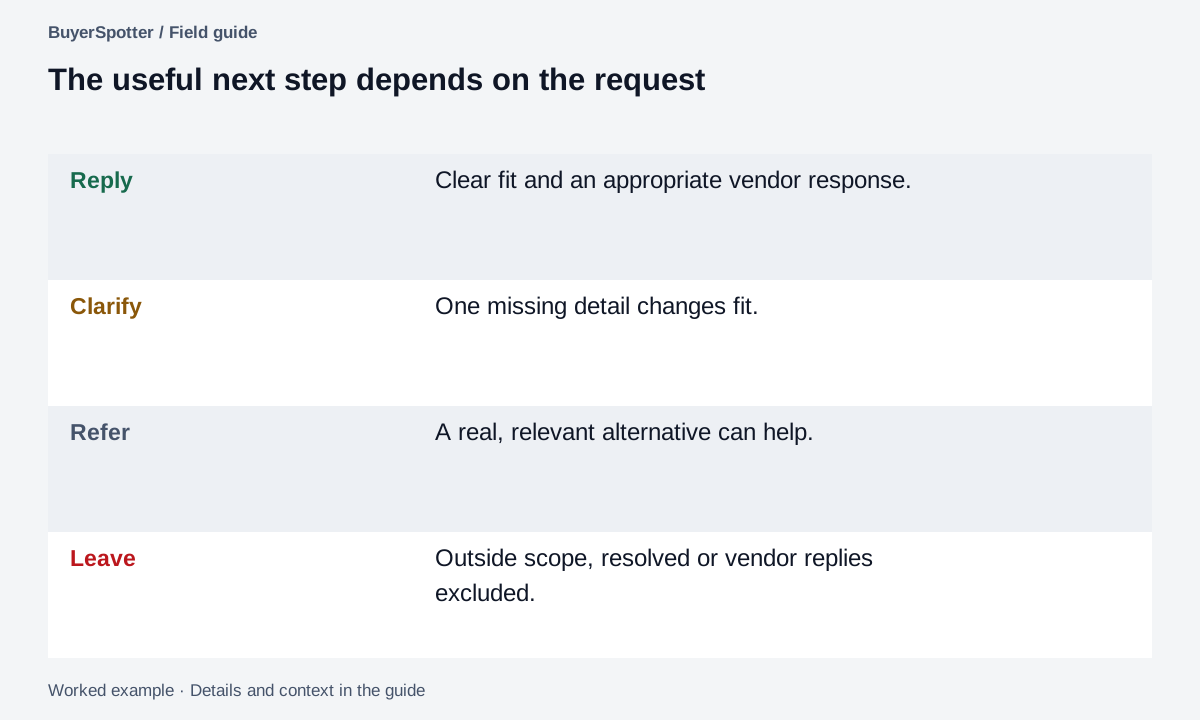
Read the example as text
- Reply
- Clear fit and an appropriate vendor response.
- Clarify
- One missing detail changes fit.
- Refer
- A real, relevant alternative can help.
- Leave
- Outside scope, resolved or vendor replies excluded.

Read the requirement before the opportunity
Example
"Looking for a payroll specialist who understands restaurants with hourly staff. We are opening our second location next month."
The post names a service, industry, staffing model, and deadline. A specialist can check those requirements against their actual work. A generic payroll product may still be a poor fit if it does not address the situation the buyer described.
Record unknowns separately. The author has not stated a budget, decision process, or whether they want software, implementation help, or an ongoing service.
Choose among reply, clarify, and leave
Reply when the need fits, your facts are current, and the source welcomes the response. Ask a focused question when a missing detail determines fit. Leave the conversation when the work is outside your scope, the request is resolved, or the author wants recommendations only from customers.
A busy thread does not need another general pitch. Read existing answers and add something that addresses an unanswered requirement.
Use the opportunity checklist to keep evidence and unknowns separate. Once a response is appropriate, the reply-writing guide helps address the request without a generic pitch.
Prioritize the request you can answer usefully
Example
Request A says, "Need payroll help urgently." Request B says, "Our restaurant is opening a second location next month. Looking for a payroll specialist familiar with hourly staff."
Request A has urgency but little information about scope. Request B gives a clearer fit test. A restaurant-payroll specialist may prioritize reviewing B while asking one focused question about A. Urgency alone does not make A a better opportunity.
Use a two-column note: facts the author supplied and details that would change your decision. If the missing detail would not change your fit or the next response, do not ask for it simply to fill a qualification form.
Recheck the request immediately before replying. An unanswered question in your notes may already have an answer in the thread. This editorial prioritization method reduces duplicate questions and helps you leave unsuitable posts alone.
Complete the payroll note with facts and unknowns separated
Worked example
- What the author said
- Two restaurant locations, hourly staff, a payroll specialist, next month.
- What that supports
- A review of restaurant payroll experience and the ability to support the requested launch timing.
- What it does not establish
- Headcount, budget, buying authority, the existing system or whether setup work is included.
- Question that changes fit
- "Are you looking for someone to run payroll, or a system your team will operate?"
- Decision
- Clarify that service model in the permitted channel before offering the wrong type of solution.
The mistake to avoid is silently filling the gaps from the author's job title or the size of the business. Two locations do not tell you how many employees are on payroll. "Next month" does not mean they are ready to sign today.
If new information arrives, update the same note rather than keeping two conflicting versions. For example, if the author says they only want software, a payroll service can stop the sales review while a suitable software provider checks its current support for hourly staff. If the author has already chosen a supplier, mark the search resolved even if the original post still looks relevant.
Use the blank qualification note below on one request. Then compare it with the replacement checklist when the recommendation must also preserve an existing workflow. Once a reply is appropriate, use the before-and-after writing examples to keep it specific.
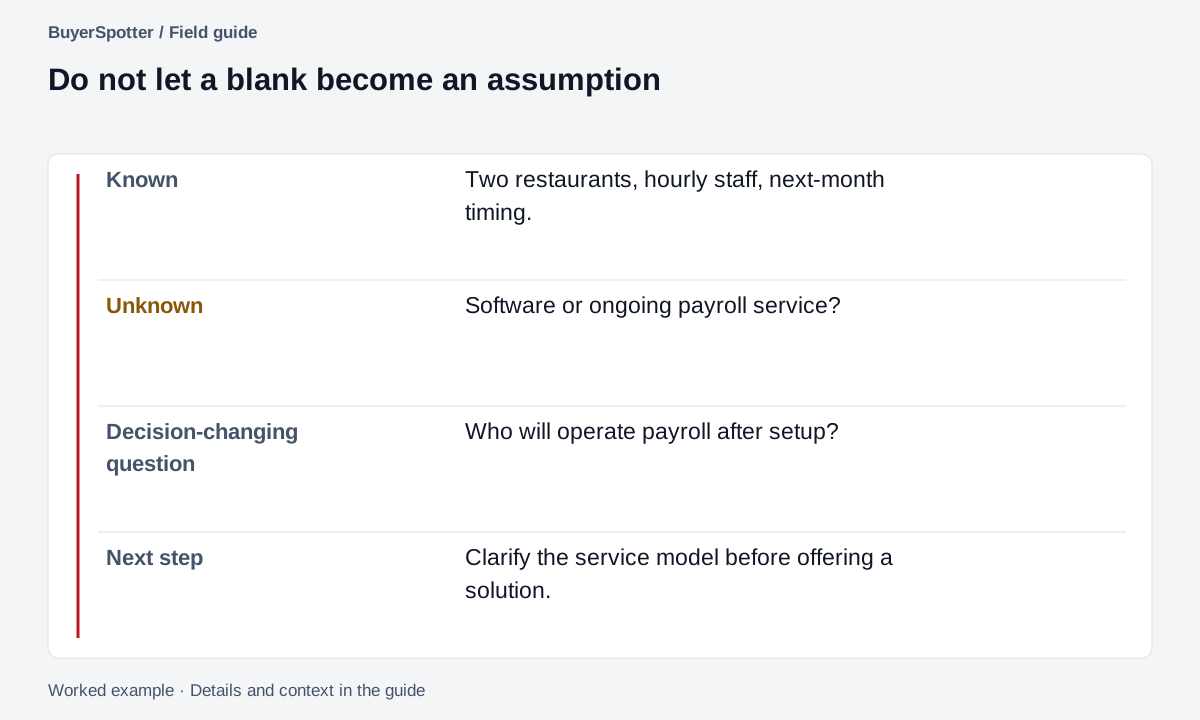
Read the example as text
- Known
- Two restaurants, hourly staff, next-month timing.
- Unknown
- Software or ongoing payroll service?
- Decision-changing question
- Who will operate payroll after setup?
- Next step
- Clarify the service model before offering a solution.
Copy a request qualification note
Original request: [link and relevant wording]
What they want recommended: [service or product]
Stated requirements: [exact details]
What we can substantiate: [fit and relevant experience]
Unknown that changes fit: [one question]
Thread status: [open / resolved / unclear]
Source permits this response: [check]
Decision: [reply / clarify / leave]
A request is not an invitation to every channel
A person asking publicly for recommendations may not welcome a private message. Follow their wording and the community rules. Do not turn a source link into a contact-enrichment exercise.
BuyerSpotter preserves the context around a match so you can make this decision. It does not contact people for you or guarantee that a recommendation request will become a customer.
Sources and method
Syften's buying-intent guide, reviewed 6 September 2026, uses recommendation requests among its examples of buying conversations. The source is a vendor description, not proof that every recommendation request is commercially valuable.
The reply, clarify, or leave decision process is our editorial method. Check the original conversation and applicable participation rules each time; a request for recommendations does not by itself authorize private outreach.
Frequently asked questions
Is a recommendation request a good sales lead?
It is one of the clearest buying signals, but fit still depends on the service, constraints and whether the thread is still open. Treat it as a reason to review, not a promised sale.
What should I do when a recommendation request is vague?
Ask one question that would change your decision, such as the type of work or location. Skip questions whose answers would not affect fit.
When should I not reply to a recommendation request?
When the work is outside your scope, someone has already been chosen, or the author asked only for recommendations from past customers.
Where do most recommendation requests appear?
Often in local Facebook groups and on Nextdoor, and in professional communities for B2B services. BuyerSpotter's Facebook group monitoring alerts you when one matches your phrases.
Examples, sources and image method
Original worked examples and worksheets by BuyerSpotter. Requests and sample datasets are fictional. References are linked where used.