
Short answer
Five buying signals local businesses can recognize are a direct recommendation request, an urgent problem with a deadline, frustration with a current provider plus a request for alternatives, a specific constraint such as property type or language, and an upcoming move, opening or renewal. Check service, area and capacity before treating any signal as a job.
Let BuyerSpotter watch your groups and searches for you. 5-day trial, no card needed.
Add to ChromeKey takeaways
- A service word tells you the subject of a post; the situation tells you whether you can help.
- Check the non-negotiables first: service, area, buyer type and scope. Timing comes second.
- Urgency does not create capacity. If you cannot do the work, a referral or clarifying question may help more.
- A fresh post outside your service area should not outrank an older request you can still answer.
- No single phrase proves someone is ready to buy; the author may lack budget or already have help.
Look for a buying situation
A service word tells you the subject of a post. The situation tells you whether your business can help. These five patterns are useful starting points:
- A direct recommendation request names a provider or job the author wants help finding.
- An urgent operational problem adds a deadline or consequence, such as a business unable to open.
- Frustration with a provider becomes more actionable when the author also asks for alternatives.
- A specific constraint, such as property type or required language, helps specialists recognize fit.
- An upcoming move, opening, or contract renewal can explain why the person is asking now.
Nextdoor posts often carry these signals; see reviewing Nextdoor requests and Nextdoor leads. The recommendation request guide covers the most common signal in detail.
Compare five requests with their misleading lookalikes
The following fictional posts cover different services. In each pair, a shared keyword hides a different decision. Read the words that tell you who needs what before considering urgency.
Swipe sideways for more columns, if needed.
| Signal | Worth inspecting | Similar, but different |
|---|---|---|
| Recommendation | "Who handles bookkeeping for independent shops?" A buyer names a job and business type. | "I teach bookkeeping for shop owners." The author is selling a course. |
| Urgent need | "Our office AC has failed. Who repairs commercial units today?" Equipment and capacity need checking. | "How can I maintain our office AC?" The author wants advice, not necessarily a visit. |
| Provider change | "We need a new dog walker who can handle two large dogs." Handling and schedule are fit requirements. | "Our dog walker is away this week." A situation is described, but no replacement is requested. |
| Specific constraint | "Looking for a tutor experienced with adult beginners, evenings only." Experience and schedule matter. | "Evening tutor wanted for a full-time staff role." An independent tutor is not the stated hiring model. |
| Upcoming event | "Can anyone recommend catering for a 20-person office lunch next Friday?" Date, scale and service are stated. | "Photos from our office lunch last Friday." The event has already happened. |
The weaker side is not automatically worthless. A maintenance question can inform a useful guide; a staffing post may interest someone seeking employment. Give it the correct purpose instead of adding it to your customer queue.
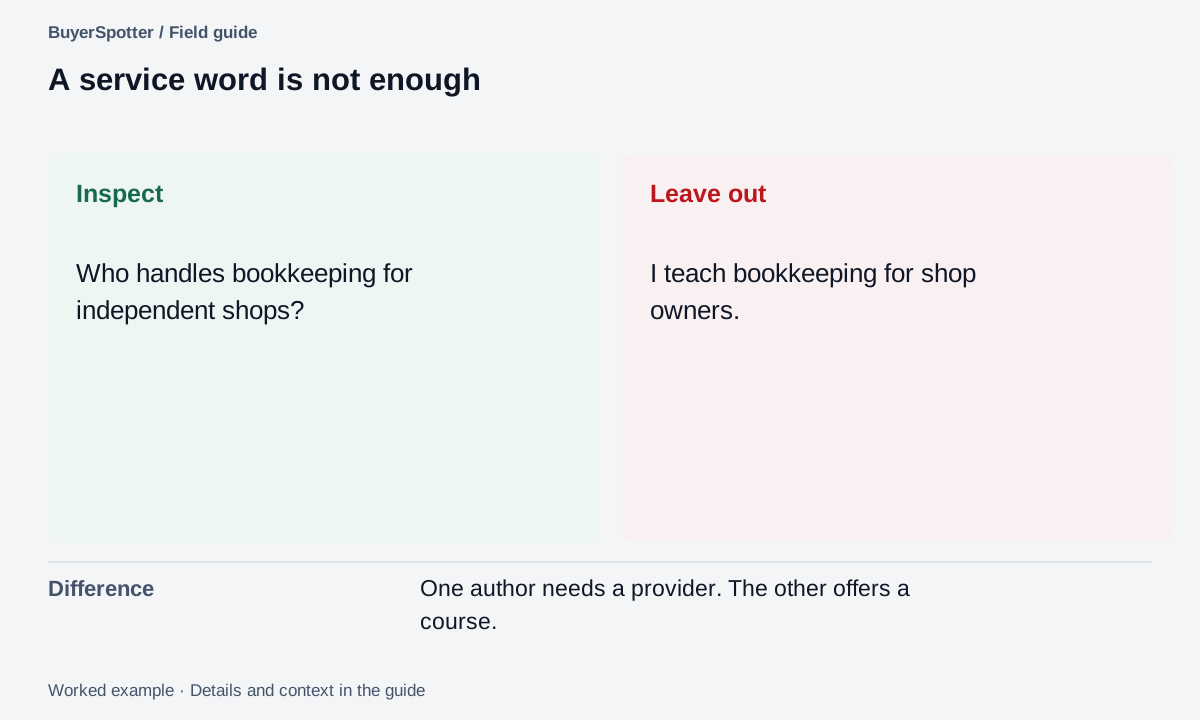
Read the example as text
- Inspect
- Who handles bookkeeping for independent shops?
- Leave out
- I teach bookkeeping for shop owners.
- Difference
- One author needs a provider. The other offers a course.

Qualify the job before the urgency
Example
"Our office AC stopped working. Does anyone know a technician available near Round Rock today?"
An HVAC business should check whether it handles commercial systems, serves that area, and can truthfully meet the timing. A residential-only installer may be a poor fit even though the request looks urgent.
Urgency does not create capacity. When you cannot do the work, a relevant referral or practical clarification may help more than an offer you cannot deliver.
Use two passes to review a post
First check the non-negotiables: service, area, buyer type, and scope. Then inspect timing and the current thread. A fresh post outside your service area should not outrank an older request you can still answer usefully.
Keep early research separate in your notes. Someone preparing to open a second location may eventually need several services, but that does not make every vendor relevant to the current question.
Work through an actual post with the opportunity checklist. It helps record what is known without turning missing details into a confident score.
Decide which missing detail changes the answer
Use this editorial decision table to avoid asking buyers for information that does not affect fit. It uses the office AC example above.
Swipe sideways for more columns, if needed.
| What is missing? | Why it matters | Useful next step |
|---|---|---|
| Property or equipment type | Your business may not service the installation | Ask the scope question before offering a visit |
| Job location | The request may be outside your working area | Ask for the area, without requesting a public home address |
| Actual availability | The buyer needs help today | Check your schedule before stating a time |
| Whether help was found | The thread may already be resolved | Read the latest replies before contacting anyone |
A constraint can also rule out a match immediately. Keep that as a clear decision rather than lowering a score and leaving an unsuitable request in the follow-up queue.
Finish one review without filling in the unknowns
Worked example
Offer: commercial AC repair in Round Rock. Request: the office AC example above.
- Evidence in the post
- Office premises, failed AC, Round Rock and a request for help today.
- What the business has checked
- It works on commercial systems and serves Round Rock.
- What is still unknown
- Equipment type and whether a technician is actually free today.
- Decision
- Check capacity first. If a visit is possible, ask which type of system needs attention before confirming suitability.
A poor review would label this "ready to buy" and promise a same-day repair. The post supports neither a technical diagnosis nor a completion time. A useful review ends with a decision that the business can carry out honestly.
If the team is fully booked, change the decision to leave or offer an appropriate referral. Do not keep the request in an urgent queue simply because the language sounds valuable. If this happens often, add current capacity to the human review checklist rather than treating it as a permanent exclusion from future searches.
Use the opportunity checklist on one accessible post now. When a response belongs in the thread, continue with the response-writing exercise.
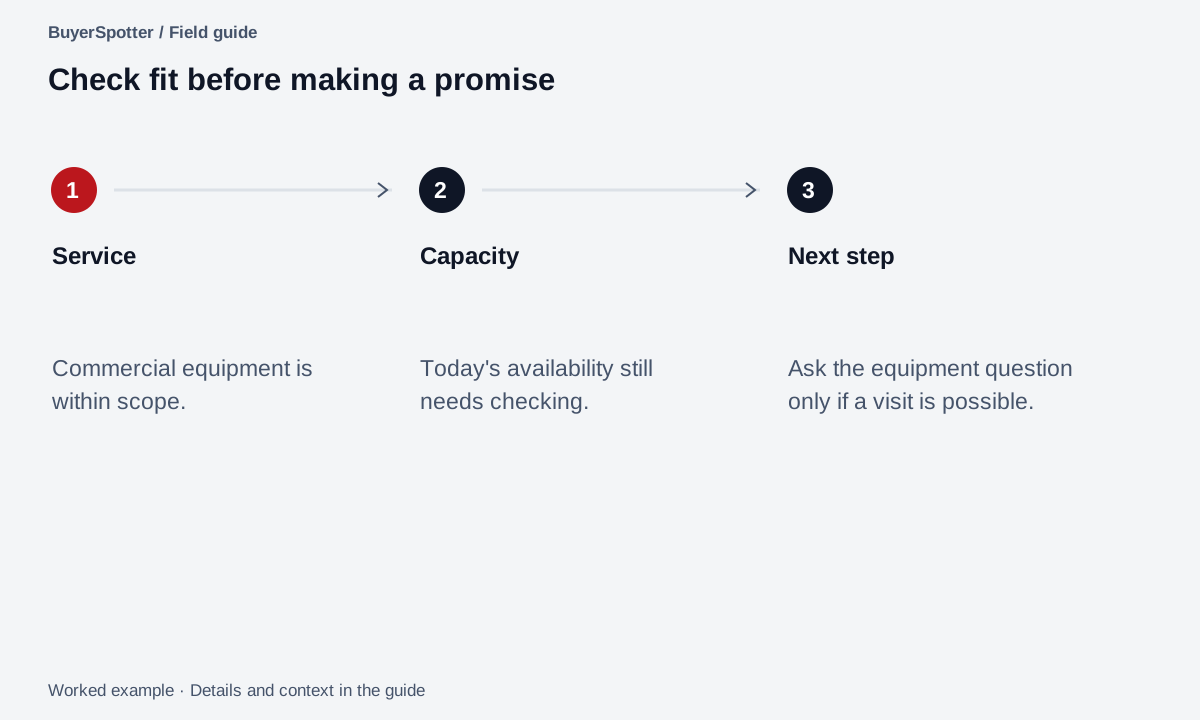
Read the example as text
- Service
- Commercial equipment is within scope.
- Capacity
- Today's availability still needs checking.
- Next step
- Ask the equipment question only if a visit is possible.
Copy a local fit checklist
Post and date: [link and time]
Requested work: [quote the relevant words]
Service fit: [yes / no / unclear]
Area fit: [yes / no / unclear]
Scope or property type: [known details]
Timing we can meet: [verified availability]
Already resolved: [yes / no / unclear]
Next step: [reply / useful referral / save / leave]
Keep the uncertainty visible
A request can be relevant and still fail to become a job. The author may lack budget, be asking for a friend, or receive a recommendation before you arrive. Do not label someone ready to buy from one phrase.
Review patterns over a defined period. If most apparent opportunities fail on geography, improve source selection. If they fail on scope, explain that scope more precisely in your opportunity definition.
Storm damage is a classic urgent signal; see tree service leads. For bookkeeping, see how to get bookkeeping clients.
Sources and method
Narrative Field's home-services page, reviewed 6 September 2026, provides vendor examples combining intent, service, geography, timing, and exclusions. It is a relevant example of how a product describes local request qualification, not independent evidence that a particular signal converts.
The five-pattern grouping and fit checklist here are editorial tools for reviewing posts. Use actual requests from your own source set to test whether the distinctions help your business.
Frequently asked questions
What counts as a buying signal for a local business?
A post that describes a situation you can help with, such as a recommendation request, an urgent repair, a switch away from a current provider or an upcoming move. The situation matters more than the service keyword.
Should I reply to every urgent local request?
No. Confirm that you handle the work, serve the area and can truthfully meet the timing. If you cannot, a useful referral is better than an offer you cannot deliver.
How do I decide which local post to answer first?
Rank by fit before freshness: service, area, buyer type and scope first, then timing and whether the thread is still open. The opportunity checklist helps record what you know.
Does a recommendation request mean the person will hire someone?
Not necessarily. They may be asking for a friend, lack budget or pick someone before you reply, so treat it as a reason to review the thread.
Examples, sources and image method
Original worked examples and worksheets by BuyerSpotter. Requests and sample datasets are fictional. References are linked where used.