

Short answer
The most direct handyman leads are neighbors posting "need a handyman" or "anyone know someone handy" in local Facebook groups and on Nextdoor. Watch for those phrases in the groups you belong to, answer quickly with a specific, honest reply, and use paid lead services only if you need more volume. BuyerSpotter finds the posts; you reply yourself.
Get an alert when a neighbor asks for your trade. 5-day trial, no card needed.
Add to ChromeKey takeaways
- Handyman requests are usually lists of small jobs: mounting, patching, assembly, doors and caulking.
- Phrases such as "someone handy" and "odd jobs" find requests that never use the word handyman.
- Competitors advertise in the same groups, so exclude their wording without excluding real requests.
- Say when a job needs a licensed electrician or plumber; it builds trust and keeps you within the rules.
What neighbors write when they need a handyman
Handyman requests tend to be short, urgent and bundled. These fictional examples show the pattern:
- "Need a handyman this weekend to mount a TV and hang some shelves."
- "Anyone know someone handy? Small list: sticking door, loose gate latch, recaulk the tub."
- "Looking for help assembling a wardrobe and a bed frame. Can pay cash."
- "Recommendations for a reliable handyman for a honey-do list? Older homeowner, prefer someone patient."
- "Who can patch a few drywall holes before our rental inspection on Friday?"
Good phrases to monitor: "need a handyman", "recommend a handyman", "someone handy", "odd jobs", "furniture assembly" and "TV mounting". Keep each as its own entry. Because matching is rule-based and does not add synonyms, check which wording your neighbors actually use and add it. The keyword builder is a quick way to draft a first list.
The main noise is other handymen advertising. Exclusions such as "now booking" or "offering handyman services" remove many of those posts. Be careful with a word such as "available": it would also reject "is anyone available Saturday?", which is exactly the post you want. The alert noise guide explains how to test an exclusion against a real request first.
Where handyman requests appear
Handyman work is local and small, so most requests appear where neighbors already talk: neighborhood Facebook groups, community "buy nothing" and parent groups, and Nextdoor. Some areas also have groups made for recommendations, where requests are the main content. City subreddits get a few "anyone know a good handyman" posts, mostly from renters and people who just moved.
Pick groups by the requests you see, not by member count. A 900-member group for one subdivision can produce more jobs you can reach than a regional group of 40,000. BuyerSpotter monitors up to 25 groups your account belongs to, public or private.
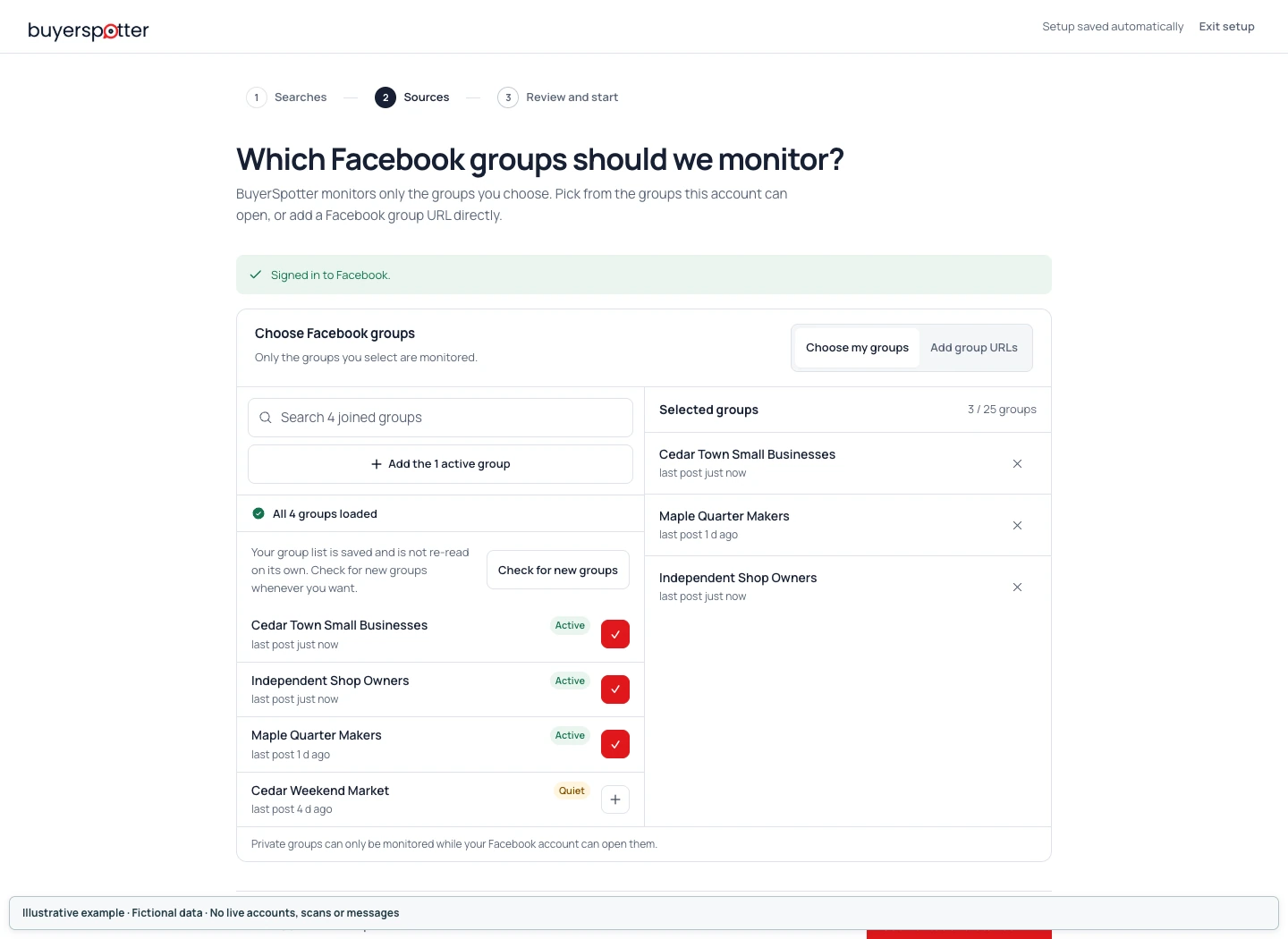
Catching handyman requests while they are fresh
BuyerSpotter is a Chrome extension that monitors Facebook groups, Reddit, LinkedIn, X (Twitter) and Nextdoor for posts where someone asks to buy, hire or get a recommendation, and alerts you so you can reply yourself. Handyman requests are often filled within hours, so speed matters. With up to 7 groups and 5 phrases, BuyerSpotter checks every 15 minutes; larger setups check every 30 or 45 minutes. Checks run only while Chrome is open, so leave it running on the computer you use for the business. Alerts can go to desktop notifications, a Telegram bot on your phone or a webhook.
When you have answered a post, mark it Contacted and add a private note or a follow-up time, so you remember to check whether the job went ahead. The alert setup chapter covers testing delivery before you rely on it.
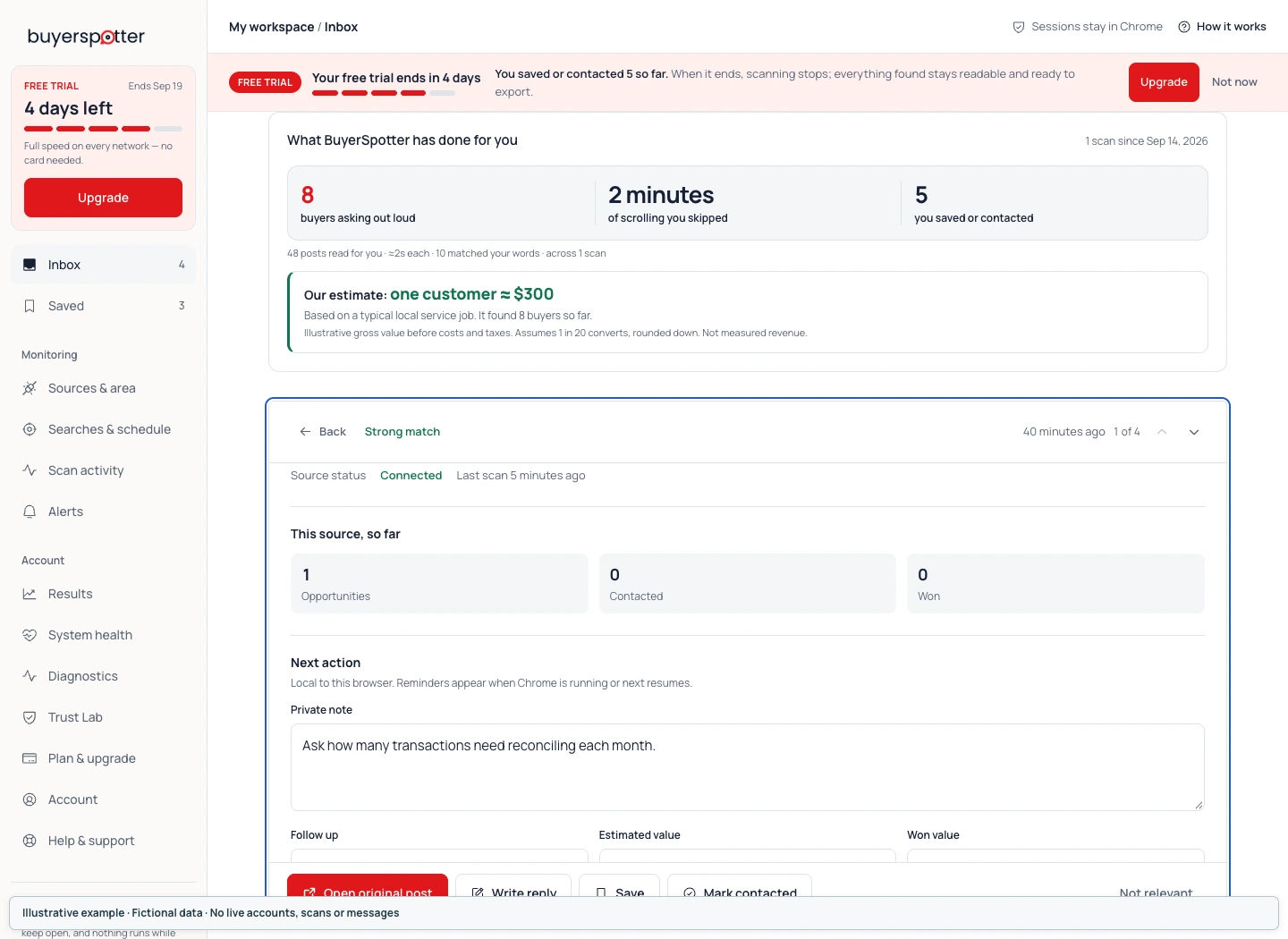
Paid handyman leads vs. neighborhood requests
Per-lead services can send handyman jobs in areas where you have no network, and they handle the intake form. They usually charge per lead, and the same job is often sent to several pros; prices vary and change, so compare current terms. Small jobs make per-lead costs matter more, because the job value is lower.
Neighborhood requests carry no per-lead charge and include the full context, including who else has replied. They depend on active groups, and other handymen see the same post. Many handymen start with community requests and add a paid service when the calendar has gaps. The home improvement leads hub compares both approaches across trades.
Whichever source you use, repeat customers matter most in handyman work. A neighbor whose list you finished well often posts again months later, or recommends you when someone else asks in the same group.
Frequently asked questions
How do handymen get customers without paying for leads?
Answer neighbors who ask for help in local Facebook groups and on Nextdoor, ask satisfied customers to recommend you in those same groups, and keep a Google Business Profile up to date.
What phrases find handyman requests?
"Need a handyman", "recommend a handyman", "someone handy", "odd jobs", "TV mounting" and "furniture assembly" cover most wording. Add your neighbors' own phrases as you see them.
How do I stop seeing other handymen's ads?
Add exclusions for their promotional wording, such as "now booking". Avoid excluding words that also appear in requests, such as "available".
How quickly will I see a new request?
As often as every 15 minutes with up to 7 groups and 5 phrases, while Chrome is open. Larger setups check every 30 or 45 minutes.
Does BuyerSpotter message the neighbor for me?
No. It is read-only. You open the post and reply yourself.