
Short answer
A community prospecting workflow for agencies starts with one service you deliver well and a defined client type. A reviewer saves the original request with its fit reason and unknowns, a service owner confirms capability and capacity, and one person replies and records the outcome, so saved posts become owned next actions instead of a pile of links.
Let BuyerSpotter watch your groups and searches for you. 5-day trial, no card needed.
Add to ChromeKey takeaways
- Monitor one clear service, such as a paid-search audit or website migration, not every mention of marketing.
- Keep direct client demand separate from staffing requests, peer discussions and subcontracting.
- Give each request one response owner so two team members do not answer the same thread.
- A saved request is research until there is a relevant conversation.
- BuyerSpotter keeps Saved, Contacted and Won statuses and exports CSV; team assignment happens in your own notes or CRM.
Start with one service you can deliver well
An agency that monitors every mention of marketing will collect questions it cannot answer usefully. Choose a service with a clear buying situation: a paid-search account review, a website migration, or a specific design project.
Define the client type, project scope, and constraints that matter. Keep staffing requests, peer discussions, and subcontracting opportunities distinguishable from direct client demand. They may all be useful, but they need different follow-up.
Agencies often find these requests on LinkedIn; recognizing buyer requests on LinkedIn shows what they look like.
Follow one request through the agency
The clinic asks for help because patients cannot book on their phones. It has not named the booking system, described the failing step or agreed a deadline. Those gaps determine what the agency should inspect before proposing work.
Worked example · fictional
Swipe sideways for more columns, if needed.
| Stage | Work to do | Output |
|---|---|---|
| Discovery | Read the original request and recent comments. | The mobile booking problem and source link in private notes; current status still to check. |
| Service fit | Ask the website lead which booking systems the team supports. | The booking system and failing step to confirm; unsupported work to decline. |
| Capacity | Check who could inspect the flow, then ask about timing. | A real availability decision; no deadline was stated in the request. |
| Reply | One person asks the missing scope question in a permitted channel. | The actual question sent, or a record that no outreach occurred. |
| Follow-up | Review the buyer's answer and agree a next step if the work fits. | A scoped conversation, a referral or a closed research item. |
These stages belong in the notes, spreadsheet or CRM your team already uses. They are an external operating process, not built-in BuyerSpotter assignments or a shared inbox. A solo operator can perform all the stages, but still benefits from separating the checks.
If capacity is unavailable, record that before anyone offers a call. It is better to decline or refer a fitting request than to imply the team can meet a deadline nobody has checked.
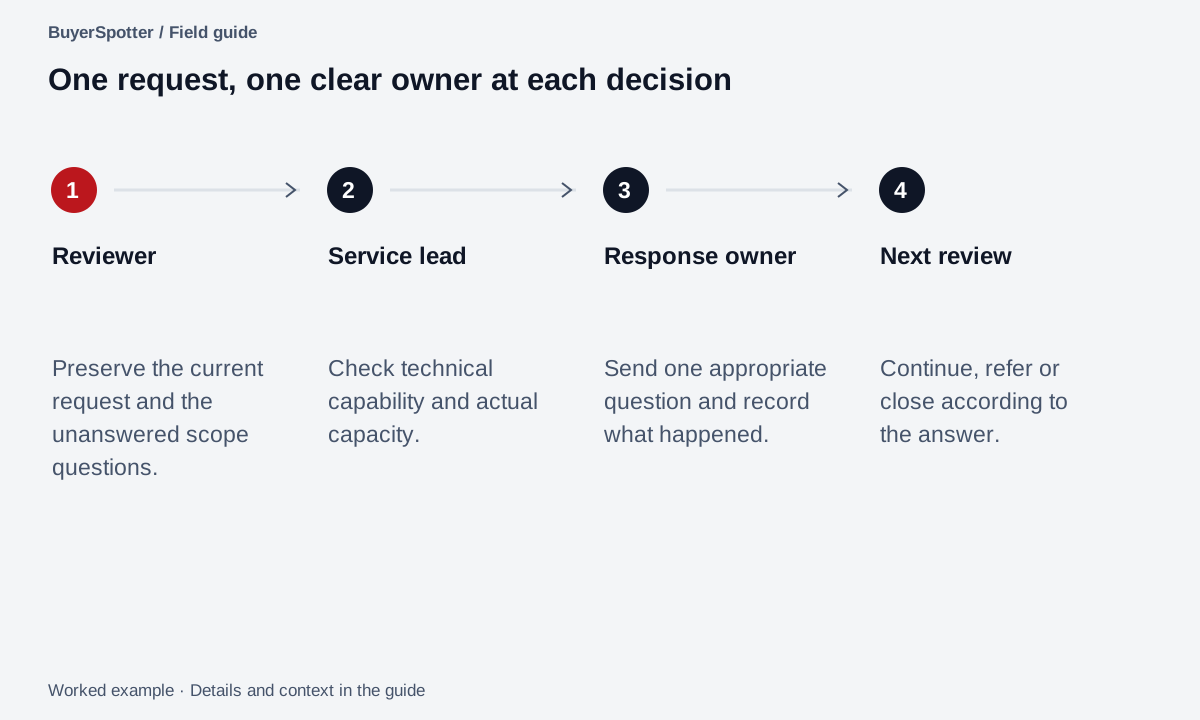
Read the example as text
- Reviewer
- Preserve the current request and the unanswered scope questions.
- Service lead
- Check technical capability and actual capacity.
- Response owner
- Send one appropriate question and record what happened.
- Next review
- Continue, refer or close according to the answer.

Identify the work inside a booking problem
Example
"Can anyone recommend someone to fix our clinic website? Patients keep calling because they cannot book an appointment on their phone. We need help with the booking flow."
The immediate problem is a mobile booking flow, not proof that the clinic needs a whole new website. Check which step fails, which booking system is involved and whether your agency can support it before suggesting work.
Make the review handoff explicit
Put the source link, request, fit reason, unknowns, and owner in your existing working notes or CRM. The person drafting the reply should not have to reconstruct why someone saved the post.
- A reviewer checks the current thread and records the fit decision.
- A service owner verifies capability and capacity.
- One person responds where appropriate and records what happened.
- The team checks outcomes and removes recurring weak sources.
This is a suggested team process, not a claim that BuyerSpotter supplies shared assignments or CRM integration.
The first-week guide follows this same clinic-booking request through setup and follow-up. Use the review worksheet when the team needs a shared definition of useful results.
Keep a private next-action note
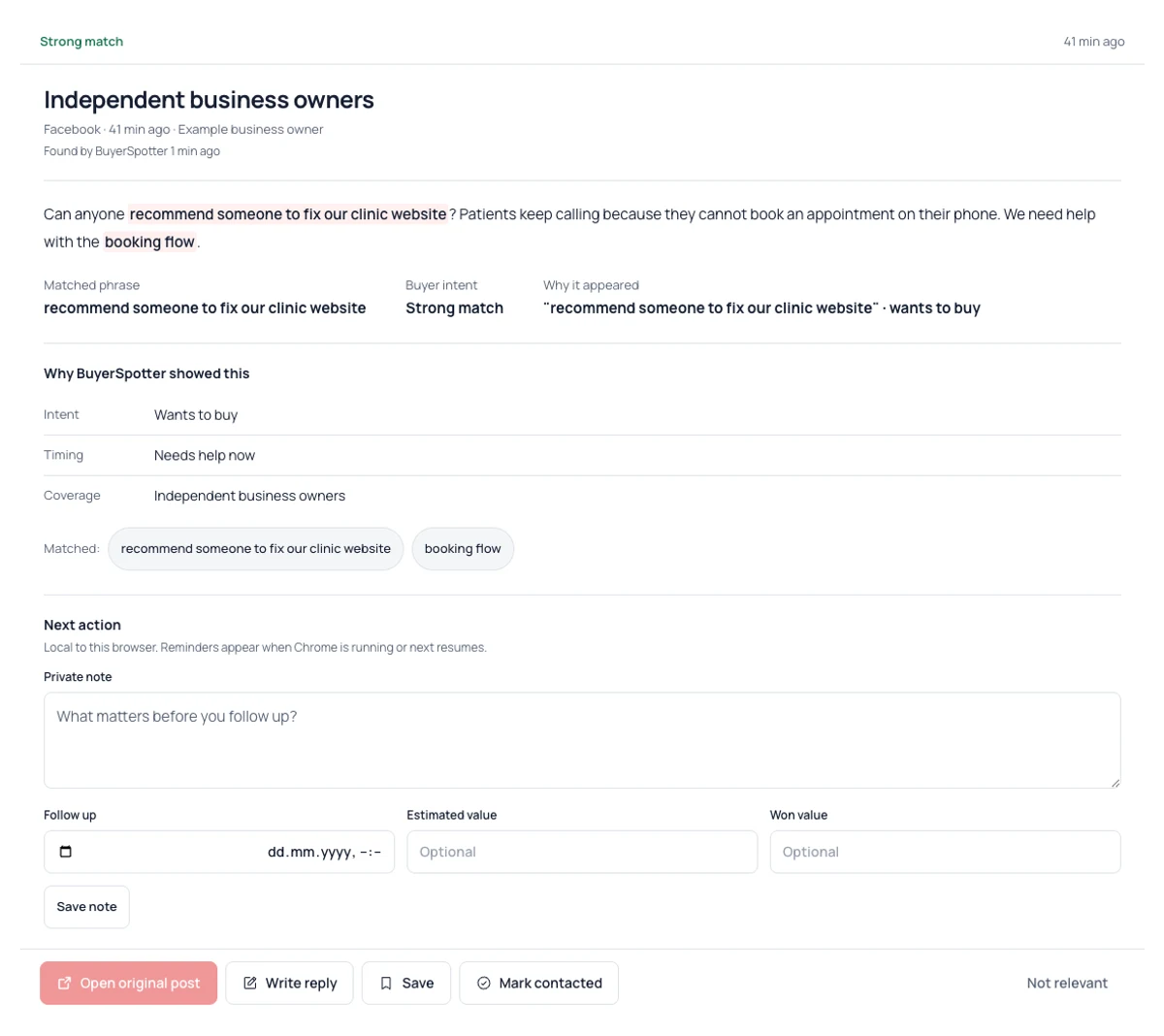
A handoff note that avoids a second investigation
The handoff should answer why the request matters and what must happen next. Avoid pasting a profile, a guess about company revenue and a bare link. Those details can distract from the requested work.
Worked example · fictional
Swipe sideways for more columns, if needed.
| Field | Filled example |
|---|---|
| Requested work | Review a clinic website whose mobile flow prevents patients from booking. |
| Evidence | Can anyone recommend someone to fix our clinic website? Patients keep calling because they cannot book an appointment on their phone. We need help with the booking flow. |
| Owner | The designated account lead in our existing working system. |
| Capability check | Website lead must confirm the booking system and requested work are supported. |
| Capacity check | Not checked yet; do not promise a delivery date. |
| Question before proposal | Which booking system do you use, and where do patients get stuck on their phones? |
| Status | Research; no message sent and no project agreed. |
In BuyerSpotter, a private note on a saved request can hold the question you need to answer. If the team needs shared ownership, transfer only the necessary information into its existing system through your normal, permitted process. Do not assume a local note is visible to colleagues or automatically synchronized.
Keep private content private. A review note usually needs a link and a short description of the requested work, not a copy of an entire discussion. Read the first-week guide for the distinction between Saved, Contacted and a buyer response.
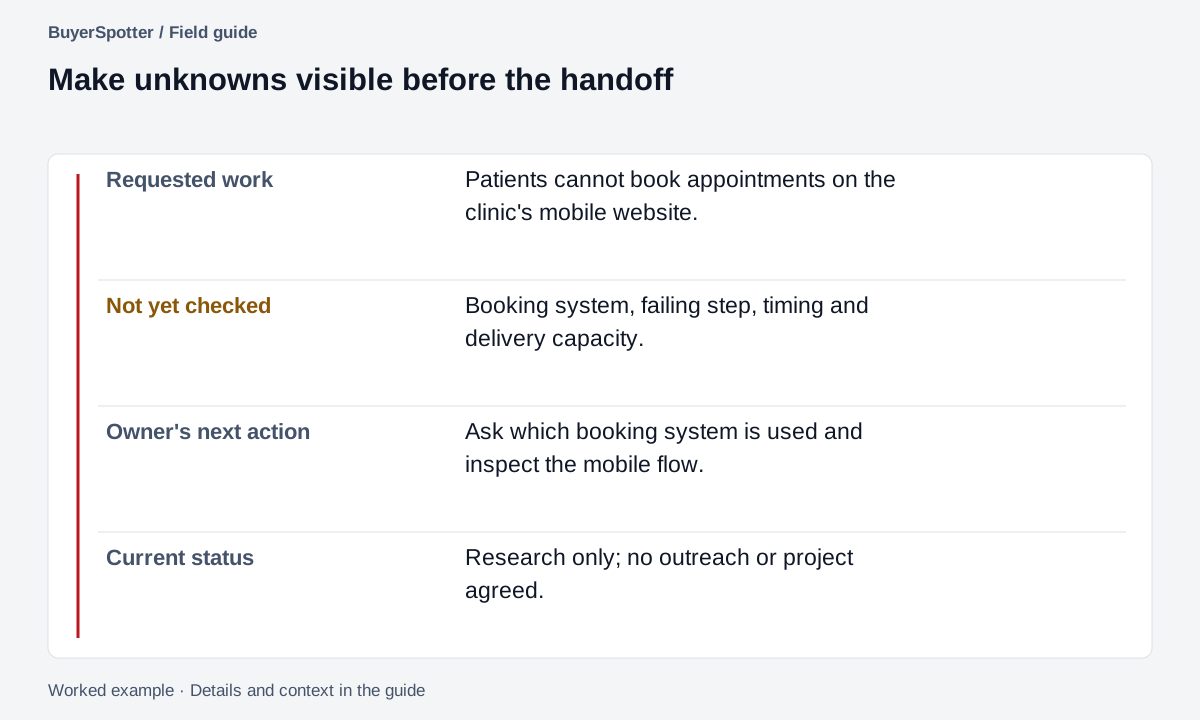
Read the example as text
- Requested work
- Patients cannot book appointments on the clinic's mobile website.
- Not yet checked
- Booking system, failing step, timing and delivery capacity.
- Owner's next action
- Ask which booking system is used and inspect the mobile flow.
- Current status
- Research only; no outreach or project agreed.
Separate the first useful action from a proposal
Write down what must be true before your agency can offer the requested work. For this clinic, check the website and booking systems, where the mobile flow fails, who can grant access and whether your team has capacity. These are questions to clarify, not facts inferred from the company profile.
Example
The clinic says patients cannot book on their phones. Ask which booking tool is used and where patients get stuck. A full website rebuild or a promised increase in bookings would be premature before you inspect the problem.
Keep the record in research until the buyer engages in a relevant conversation. Once there is an agreed next action, record the owner and date. If the handoff stalls, inspect whether the missing input is buyer information, internal capacity, or a decision nobody owns. More monitoring will not resolve those three different problems.
Replace the retainer pitch with a useful first question
Worked example · fictional
Premature: "We can handle all your marketing. Let's book a call to discuss our monthly plans."
Relevant first response: "I work with an agency that improves appointment-booking websites. Which booking system do you use, and where do patients get stuck on their phones? That will help us check whether this is a problem we can help with."
The second response connects to the request without claiming the problem is already diagnosed. It identifies the agency's role and asks for information that changes the service decision. Only post it if it reflects the work you actually do and the community permits the response.
If the buyer supplies the missing details, the response owner should return to the capability and capacity checks before proposing work. If another teammate has already replied, pause the second response and agree who continues. If nobody on the team can deliver the work, close the item or offer a relevant referral without implying a partnership that does not exist.
Review the bottleneck after a few items. Requests sitting untouched need an owner or a smaller workload. Repeatedly unsupported technical stacks need a tighter offer definition. Good conversations that do not become projects need a separate sales review. Increasing the number of monitored sources is not the same fix for all three situations.
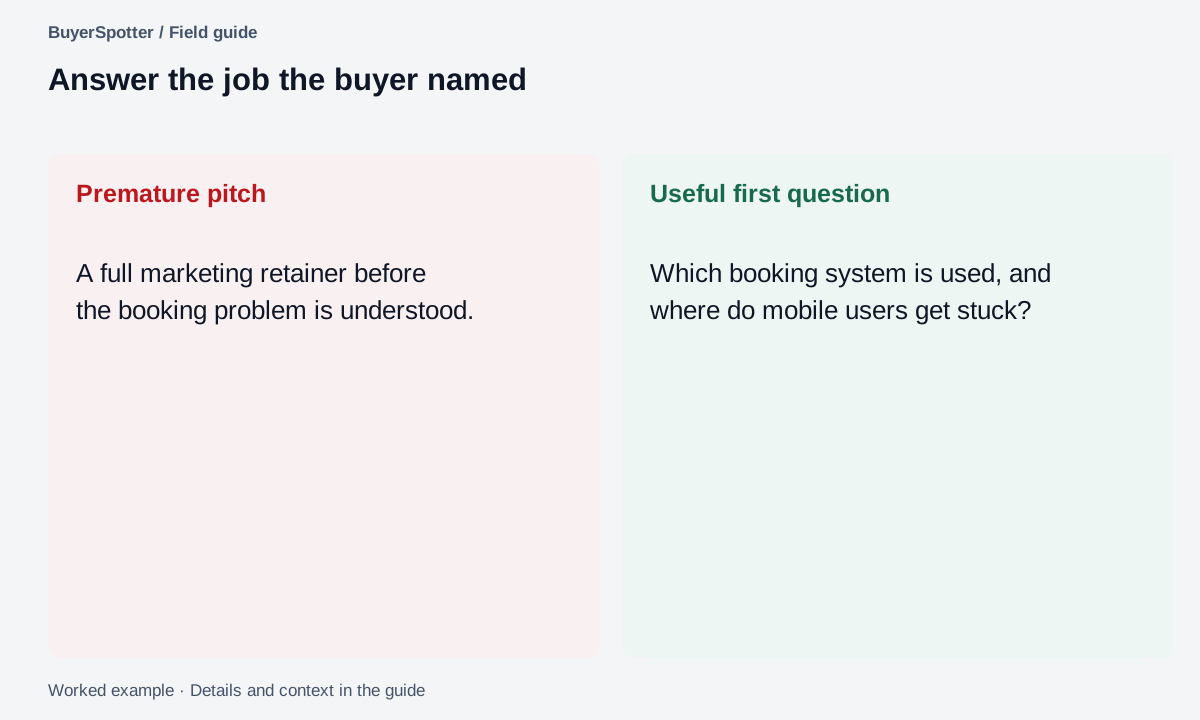
Read the example as text
- Premature pitch
- A full marketing retainer before the booking problem is understood.
- Useful first question
- Which booking system is used, and where do mobile users get stuck?
Copy an agency opportunity brief
Requested service: [specific work]
Client context: [industry and situation stated in the post]
Source and current thread: [link]
Deadline: [stated / unknown]
Our relevant capability: [verified]
Capacity checked by: [person and date]
Unknown before proposing work: [question]
Response owner: [person]
Next step: [action and date]
Outcome: [reply / conversation / project / no fit]
Do not confuse activity with pipeline
A saved request is a research item until you have a relevant conversation. Keep it separate from qualified opportunities and signed work. If two team members answer the same thread independently, the agency can look disorganized.
Start with a review workload your team can sustain. If the requests are good but replies never happen, solve ownership or capacity before adding more sources.
Sources and method
For research on LinkedIn, its official member-post search instructions, reviewed 6 September 2026, describe keyword-based post search and filters including date, author, and content type. These controls help define the sample an agency reviews.
The ownership model, triage process, and record template here are editorial practices. They are not claims that BuyerSpotter provides a shared inbox, team assignment, or CRM integration. Use them in the working system your team already maintains.
Frequently asked questions
How can an agency find clients in online communities?
Pick one service and client type, monitor places where those clients ask for help, and review each request for fit before replying with an answer to their stated problem.
Where do agencies find client requests?
LinkedIn posts, industry Facebook groups and relevant subreddits are common starting points. See recognizing buyer requests on LinkedIn.
Does BuyerSpotter have team assignment or CRM integration?
No. It keeps one inbox with Saved, Contacted and Won statuses and can export CSV or send matches to a webhook, so you can move them into the system your team already uses.
What should an agency do before proposing work from a post?
Clarify what must be true first, such as which system is involved, where the problem occurs and whether you have capacity. A full proposal is premature before you inspect the issue.
Examples, sources and image method
Original worked examples and worksheets by BuyerSpotter. Requests and sample datasets are fictional. References are linked where used.
Screenshots show the real BuyerSpotter interface with fictional requests. They illustrate the controls, not a live scan. Product version 0.8.6. Screenshots show the current interface with example data.