
Short answer
Social listening tracks what people say about a topic, brand or competitor so you can learn from recurring themes. Buyer-intent monitoring looks for specific posts where someone describes a need your business could address, then checks fit and whether the request is still open. Use listening for research and intent monitoring for conversations worth answering.
Let BuyerSpotter watch your groups and searches for you. 5-day trial, no card needed.
Add to ChromeKey takeaways
- Listening asks whether a theme recurs; intent monitoring asks whether this specific request fits your offer.
- A mention count is not a count of potential customers.
- One post can serve both jobs, so store the research observation and the fit decision separately.
- A complaint is useful research even when the author has no interest in switching providers.
- BuyerSpotter is built for the intent job: it grades matches from sources you choose with rule-based signals and leaves the reply to you.
Start with the decision you need to make
Social listening helps you understand what people say about a topic, brand, product, or competitor. You might use it to identify objections, recurring problems, support issues, or language for your website. Many useful findings will never become sales conversations.
Buyer-intent monitoring asks a narrower question: which post describes a need our business could reasonably address? The output needs the original request and enough context to judge fit.
Compare the work, not the label
Swipe sideways for more columns, if needed.
| Decision | Listening workflow | Intent workflow |
|---|---|---|
| What to inspect | Recurring themes across conversations | A specific request and its current thread |
| Useful evidence | Examples supporting a pattern | Original wording, source, timing, fit |
| Next action | Change messaging, support, or product priorities | Decide whether a response would help |
| Quality check | Does the theme hold across the sample? | Was this match worth reviewing? |
If you mainly want web mentions, compare the Google Alerts alternative guide; for request monitoring, start with the buyer-intent monitoring guide.

One post can serve both purposes
Example
"Our current IT provider takes days to answer. Looking for someone local who supports small medical offices."
A listening review might record responsiveness as a recurring complaint. An intent review checks service area, the type of office, and whether the author is still seeking a provider. The complaint alone would support the first task; the explicit request makes the second task plausible.
Store the observations separately. A mention count should not become a count of potential customers.
Make two different notes from the same conversation
Worked example
Use the fictional medical-office IT request above. The sentence about waiting days for a response can support research into a service problem. The request for a local replacement may support a separate commercial review.
Swipe sideways for more columns, if needed.
| Research note | Request-review note |
|---|---|
| Theme to investigate: slow support responses. | Requested work: local IT support for a small medical office. |
| Evidence: this post describes a delay, but one account does not establish a widespread pattern. | Required checks: service area, relevant support scope and whether the search remains open. |
| Counterexample to look for: a team satisfied with its provider's response process. | Unknown: service hours, systems involved and any requirements the office has not stated. |
| Next action: review more relevant accounts before changing website copy. | Next action: inspect the thread, then decide whether one scope question would help. |
These notes should not share one outcome column. "Useful research" does not mean "contact this author." The distinction also helps when a complaint is vivid but the person explicitly says they are staying with the current provider. You can learn from the complaint without making them a prospect.
Read the example as text
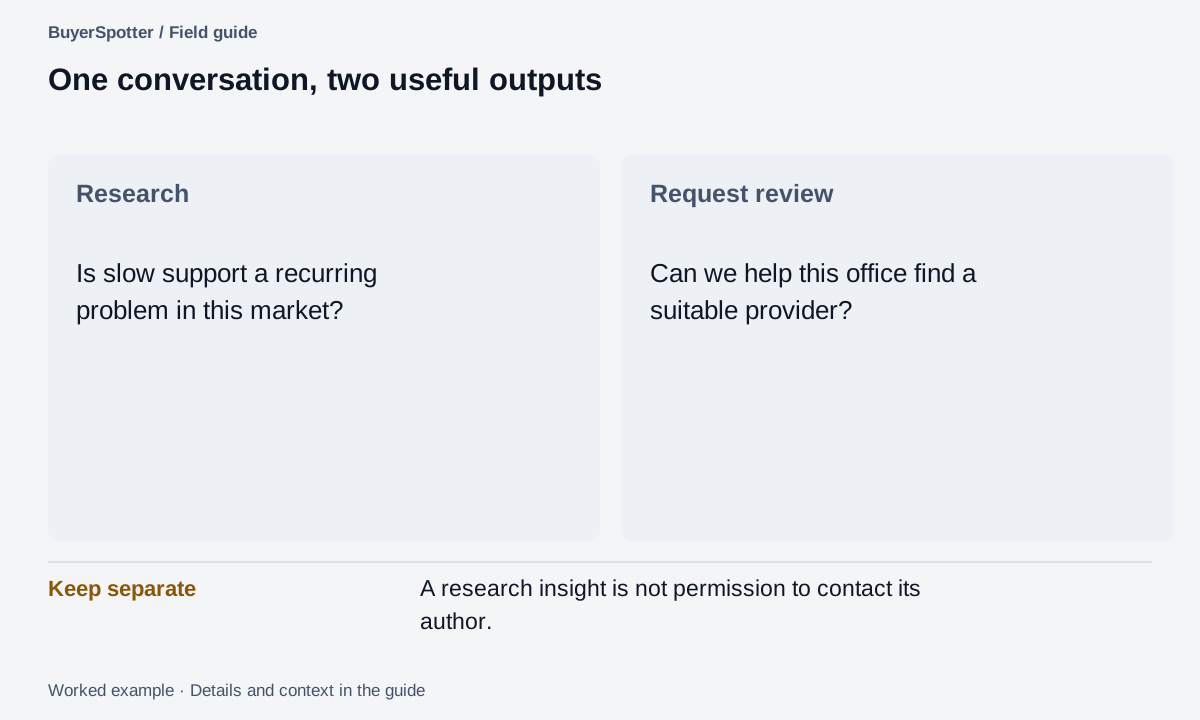
- Research
- Is slow support a recurring problem in this market?
- Request review
- Can we help this office find a suitable provider?
- Keep separate
- A research insight is not permission to contact its author.
Use research findings to improve one request definition
Keep a small language notebook during listening. For each recurring problem, save the original wording, the context, and a counterexample where the same words did not indicate demand. Choose one phrase to test in a separate request review.
In the IT-provider example, slow responses are the research theme. The combination of seeking a replacement and supporting small medical offices is the narrower commercial question. Do not add every complaint about response time to a sales queue.
Review the two outputs with different people or at different times: the research summary asks whether the pattern should affect messaging or product decisions; the request review asks whether this conversation deserves a response now. This separation is a suggested working method. It avoids reporting a research theme as a set of qualified opportunities.
For the narrower request-monitoring job, the buyer-intent workflow connects source choice, evidence and a review decision.
Choose the smallest workflow that answers your question
If your question is "What objections should our homepage answer?", a bounded manual reading session and a source notebook may be enough. If it is "Which requests should I open today?", you need a repeatable source review and a clear way to reject poor fits. Starting with the question prevents a software category from deciding the work for you.
There is overlap between products. F5Bot describes free keyword alerts and paid filtering options; Syften describes request-focused alerts. These are vendor descriptions reviewed on 7 September 2026, not evidence that either workflow will fit your sources. The label "AI" does not resolve that choice.
- Write the decision you need to make this week.
- Collect a small, dated set of accessible conversations.
- Produce either a research note or a request-review note for each useful item.
- Record which part of the work repeats and takes effort.
- Evaluate software against that part, using the exact sources and operating conditions you need.
If public web coverage is the main requirement, read Google Alerts versus community monitoring. If you are choosing a request-alert workflow, the BuyerSpotter and Syften comparison provides a shared evaluation brief. Do not buy an extra tool before you can name what it should replace.
Read the example as text
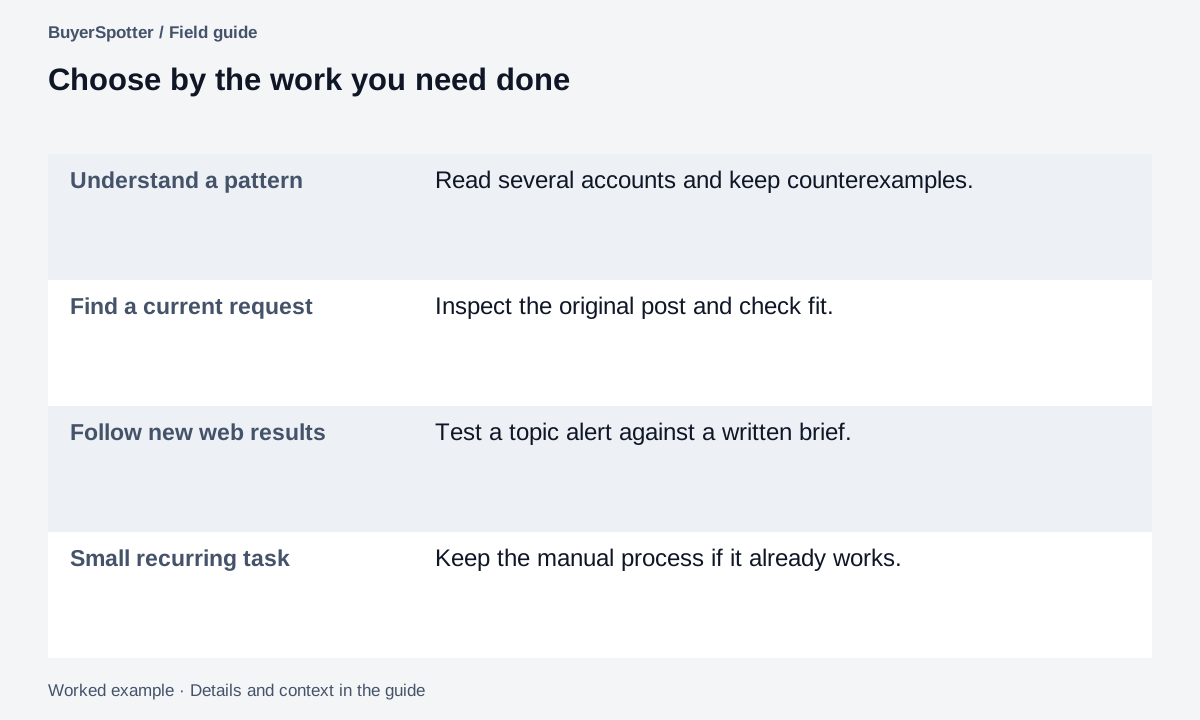
- Understand a pattern
- Read several accounts and keep counterexamples.
- Find a current request
- Inspect the original post and check fit.
- Follow new web results
- Test a topic alert against a written brief.
- Small recurring task
- Keep the manual process if it already works.
Write a two-purpose review brief
Business question: [what we need to learn or act on]
Listening question: [theme to investigate]
Intent question: [request we can help with]
Sources and review period: [scope]
Evidence retained: [links and relevant wording]
Listening outcome: [pattern and counterexamples]
Intent outcome: [useful / unclear / irrelevant]
Next action and owner: [one named action]
Avoid turning every complaint into a lead
A complaint may be useful research even when the author has no interest in switching. A discussion of a problem may be educational, historical, or hypothetical. Keep these distinctions when you review results.
BuyerSpotter focuses on reviewing buying conversations from chosen sources. This comparison describes two workflows; it is not a claim that every product in either category has the same coverage, reporting, or delivery behavior.
Sources and method
Syften's buying-intent guide, reviewed 6 September 2026, illustrates a request-focused SaaS workflow using original posts and examples of recommendations, alternatives, and problems.
The comparison in this article defines listening and intent by the business decisions they support. It is an editorial distinction between tasks, not a standardized feature classification or a benchmark of vendors.
Frequently asked questions
What is the difference between social listening and buyer intent?
Social listening studies conversations to understand a market, brand or competitor. Buyer-intent monitoring finds individual posts where someone is asking for help you could provide.
Can a social listening tool find leads?
It can surface relevant posts, but its output is usually organized around themes and mentions. For leads you need the original request, its context and a decision about fit.
Should a complaint about a competitor go into my sales queue?
Only if the author is also seeking a replacement and the need fits your offer. Otherwise keep it as research about recurring problems.
Do I need both listening and intent monitoring?
Many teams do, because they answer different questions. Review them separately so a research theme is not reported as a set of qualified opportunities.
Examples, sources and image method
Original worked examples and worksheets by BuyerSpotter. Requests and sample datasets are fictional. References are linked where used.